Rugby league and union physiques
Rugby is the rare sport where a 140 kg lock and an 85 kg scrum-half can share the same field and both be world-class. There’s no draft combine, no standardized measuring, and no positional uniformity — a tighthead prop and a winger might as well be playing different sports. That’s what makes rugby body stats so strange and fun to compare.
Code-switching makes it messier. Players move between union (15-a-side), league (13-a-side) and sevens, and their bodies change with the job. Sevens demands lean speed, league rewards dense collision-ready mass, and union still has room for genuine giants. Mark Nawaqanitawase has done all three inside about 18 months, which is exactly why people keep Googling his measurements.
Here are 11 players whose builds tell the story of both codes.
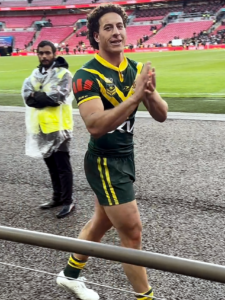
1. Mark Nawaqanitawase
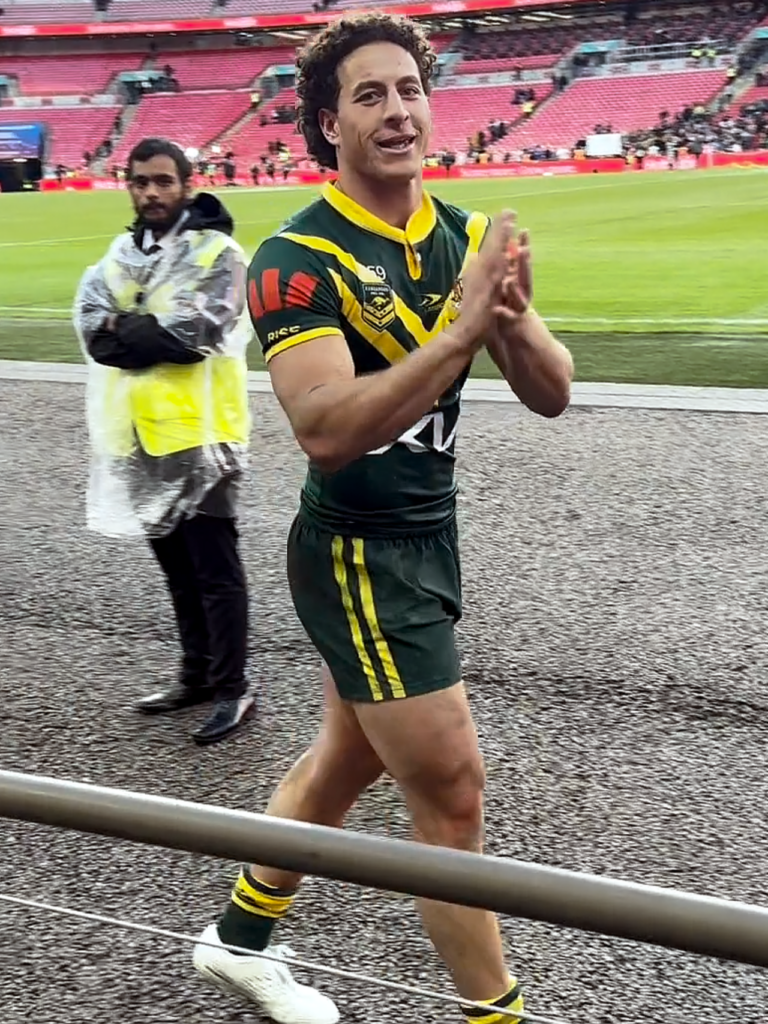
Image: Fleets / CC0, via Wikimedia Commons
Listed around 6’3″ (190 cm) and about 96 kg (212 lbs), Nawaqanitawase is the modern power winger — tall enough to win contested kicks, heavy enough to run through a fullback. Born November 1, 2000, he played for the Wallabies at the 2023 Rugby World Cup, then went to the Paris 2024 Olympics with Australia’s sevens side.
He switched to rugby league with the Sydney Roosters for the 2025 NRL season, earning representative honours in his debut year. Sevens trimmed him down; league has pushed him back toward a heavier, more collision-ready frame.
2. Joseph Suaalii
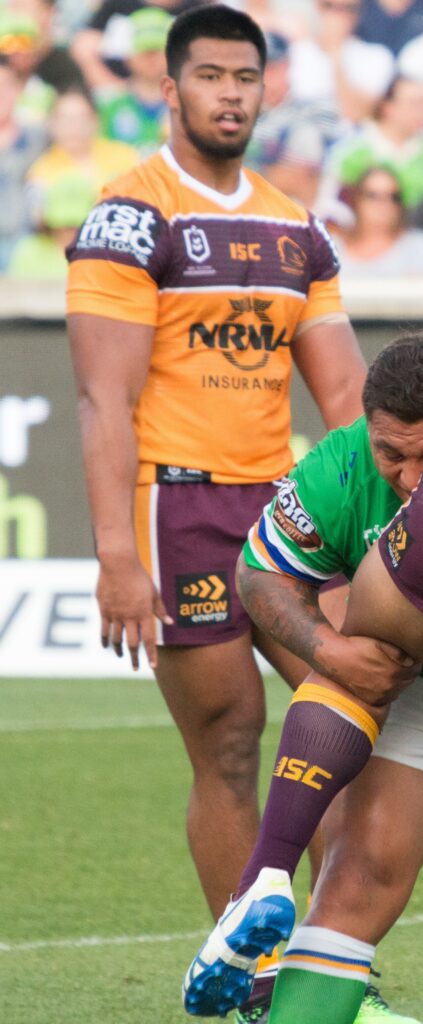
Image: https://www.flickr.com/photos/reepy_au/ / CC BY-SA 2.0, via Wikimedia Commons
Suaalii went the other direction — league to union — joining the NSW Waratahs and debuting for the Wallabies against England at Twickenham in November 2024. He’s listed at about 6’4″ (193 cm) and 100 kg (220 lbs), with a vertical leap that’s become his signature in aerial contests.
Born August 1, 2003, he was playing first-grade NRL at 17. That rare combination of length, mass and basketball-style hops is why Rugby Australia reportedly paid a fortune to get him.
3. Payne Haas
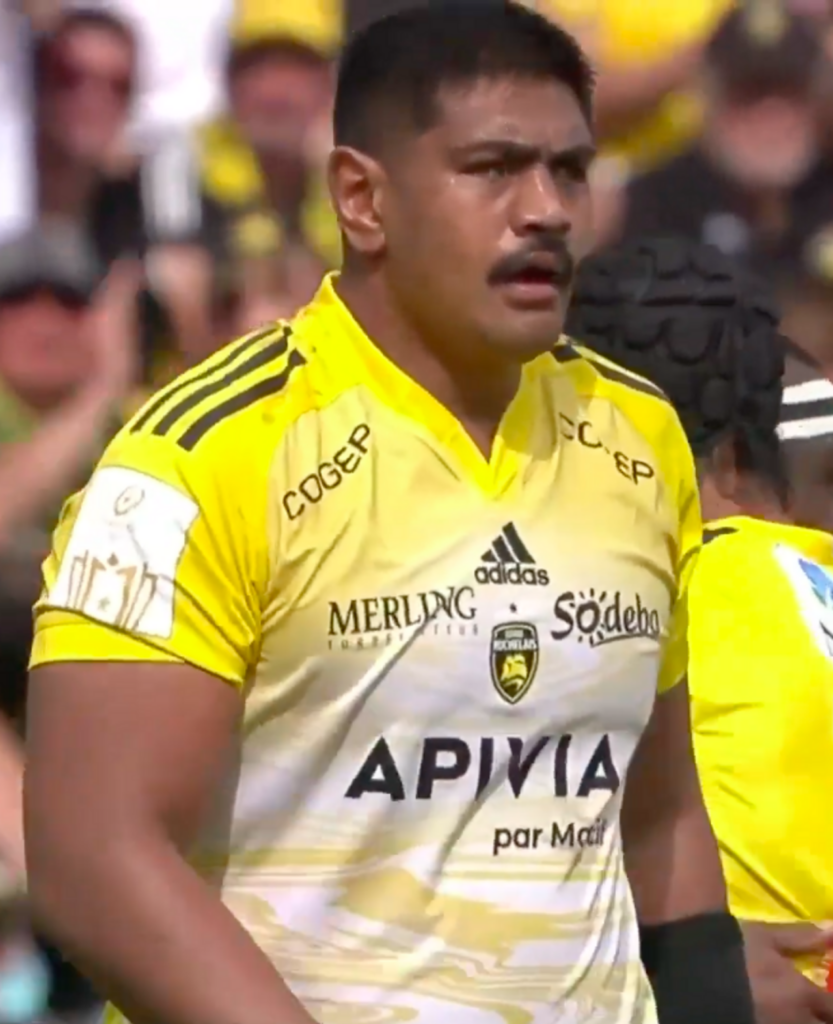
Image: Heineken Champions Cup & EPCR Challenge Cup / CC BY 3.0, via Wikimedia Commons
The Brisbane Broncos prop is the NRL’s benchmark for front-row size and speed: about 6’4″ (193 cm) and 117 kg (258 lbs). Born January 21, 1999, he debuted in 2018 and has routinely posted 200-plus running metres in a game — absurd output for a man that heavy.
Haas regularly tops NRL post-contact metre charts. He’s not a plodding tackle-bag prop; he’s a sprinter wearing a heavyweight’s body.
4. Will Skelton
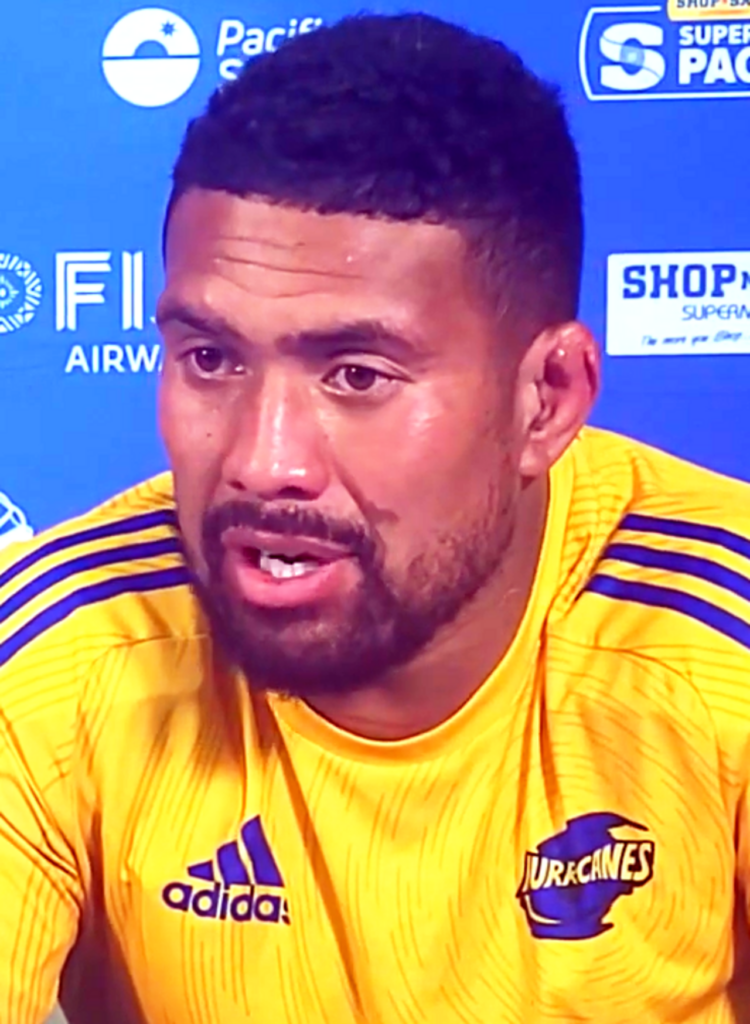
Image: The Fiji Times / CC BY 3.0, via Wikimedia Commons
At around 6’8″ (203 cm) and about 140 kg (308 lbs), Skelton is one of the biggest men to ever play Test rugby. Born May 25, 1992, the Wallabies lock won back-to-back Champions Cup titles with La Rochelle in 2022 and 2023.
He slimmed down significantly after moving to Europe — reportedly dropping serious weight to improve his work rate — and still ended up heavier than most NFL defensive tackles.
5. Maro Itoje
Itoje is the template for the modern second row: about 6’5″ (195 cm) and 115–118 kg (around 255 lbs), with the lineout reach of a lock and the breakdown engine of a flanker. Born October 28, 1994, he captained England in 2025 and led the British & Irish Lions on their tour of Australia that same year.
He was a national-level shot putter as a teenager, which explains the hip and trunk power behind his clear-outs.
6. Ardie Savea
Proof that short can be terrifying. The All Blacks loose forward stands about 5’11” (180 cm) and carries about 94 kg (207 lbs) — low centre of gravity, enormous legs, almost impossible to tackle below the waist.
Born October 14, 1993, Savea was named World Rugby Men’s Player of the Year in 2023. In a position increasingly stacked with 110 kg athletes, he wins through leverage and raw acceleration.
7. Ilona Maher
Maher has done more for rugby body-image conversations than anyone in the sport. She’s about 5’10” (178 cm) and about 200 lbs (91 kg), and she’s spent years pushing back at people who treat those numbers as an insult.
Born August 12, 1996, she won bronze with the USA sevens side at Paris 2024, finished runner-up on Dancing with the Stars later that year, and signed with Bristol Bears for a 2025 stint in English 15s rugby.
8. Sonny Bill Williams
The original code-hopper. About 6’3″ (191 cm) and 108 kg (238 lbs), Williams won NRL premierships, Rugby World Cups with the All Blacks in 2011 and 2015, and boxed professionally at heavyweight in between.
Born August 3, 1985, he built his frame around the offload — the shoulder and grip strength to stay alive in contact while two defenders hang off him. Half a generation of players copied the look.
9. Antoine Dupont
The smallest man on this list and arguably the best. Dupont is listed around 5’9″ (174 cm) and 85 kg (187 lbs), which for a scrum-half is thickset rather than small — he’s genuinely built like a powerlifter in miniature.
Born November 15, 1996, the Toulouse and France captain won Olympic gold in sevens at Paris 2024 before suffering an ACL injury in the 2025 Six Nations.
10. Taniela Tupou
“Tongan Thor” went viral as a schoolboy for running over entire teams. Born June 5, 1996, the Wallabies prop stands about 6’1″ (186 cm) and weighs about 130 kg (287 lbs) — short, wide and built low to the ground, exactly what a tighthead wants. Among front-rowers, he’s one of the few with legitimate open-field speed.
11. Jonah Lomu
Still the measuring stick. Lomu was about 6’5″ (196 cm) and 119 kg (262 lbs) at his peak, with reported 100m times near 11 seconds. In 1994 he became New Zealand’s youngest-ever Test player at 19.
His four-try demolition of England at the 1995 World Cup changed what teams thought a winger could be. He played through kidney disease for most of his career and died on November 18, 2015, aged 40.
Rugby’s appeal is that all of these builds work. A 140 kg lock, a 91 kg sevens star and an 85 kg scrum-half can all be elite, because the sport asks different things of each of them. That’s also why single-number comparisons to NFL or NBA athletes never quite land — position, not sport, decides the body.
Frequently Asked Questions
Who is the biggest player on this rugby physiques list?
Wallabies lock Will Skelton, listed at about 6’8″ (203 cm) and roughly 140 kg (308 lbs), is one of the biggest men to ever play Test rugby.
How do rugby league and rugby union physiques differ?
League rewards dense, collision-ready mass across almost every position, while union still has room for genuine giants like 140 kg locks alongside lighter specialists such as 85 kg scrum-halves.
Which player has switched between sevens, union and league?
Mark Nawaqanitawase played union at the 2023 Rugby World Cup, sevens at the Paris 2024 Olympics, then joined the Sydney Roosters in the NRL for 2025 — all inside about 18 months.
How big is Payne Haas compared with other props?
The Brisbane Broncos prop stands around 6’4″ (193 cm) and 117 kg (258 lbs), and regularly posts 200-plus running metres a game, making him the NRL benchmark for front-row size combined with speed.
What are Joseph Suaalii’s measurements?
Suaalii is listed at about 6’4″ (193 cm) and 100 kg (220 lbs), with a basketball-style vertical leap that makes him a weapon in aerial contests for the Waratahs and Wallabies.
How were players chosen for this rugby physiques list?
The 11 players were selected because their builds illustrate the extremes and contrasts of both codes — from sevens-lean wingers to 140 kg locks — and several have switched codes, changing shape with the job.
More Ardie Savea Celebrities
Trending Now



Last Updated: October 6, 2026 | Source: Healthy Celeb