Jeffery Simmons’s Fitness Philosophy
At 6’4″ and about 305 pounds, Jeffery Simmons is the kind of defensive tackle offensive coordinators lose sleep over. He’s a three-time Pro Bowler who signed a four-year, $94 million extension with the Tennessee Titans in April 2023, and he plays with a first step that has no business belonging to a man that size.
The weight isn’t the story — the acceleration is. Interior linemen get paid to collapse a pocket in under two seconds, and Simmons does it by combining raw lower-body power with hip mobility most 250-pound linebackers would envy. His training reflects that: heavy, explosive, and built around short bursts rather than long grinding sessions.
He also has a résumé that proves the training works under pressure. Simmons tore his ACL in February 2019 while prepping for the NFL Combine, got drafted 19th overall by the Titans anyway, and was back on an NFL field by Week 7 of that same season — about eight months post-surgery. That’s a rehab and conditioning program executed obsessively.
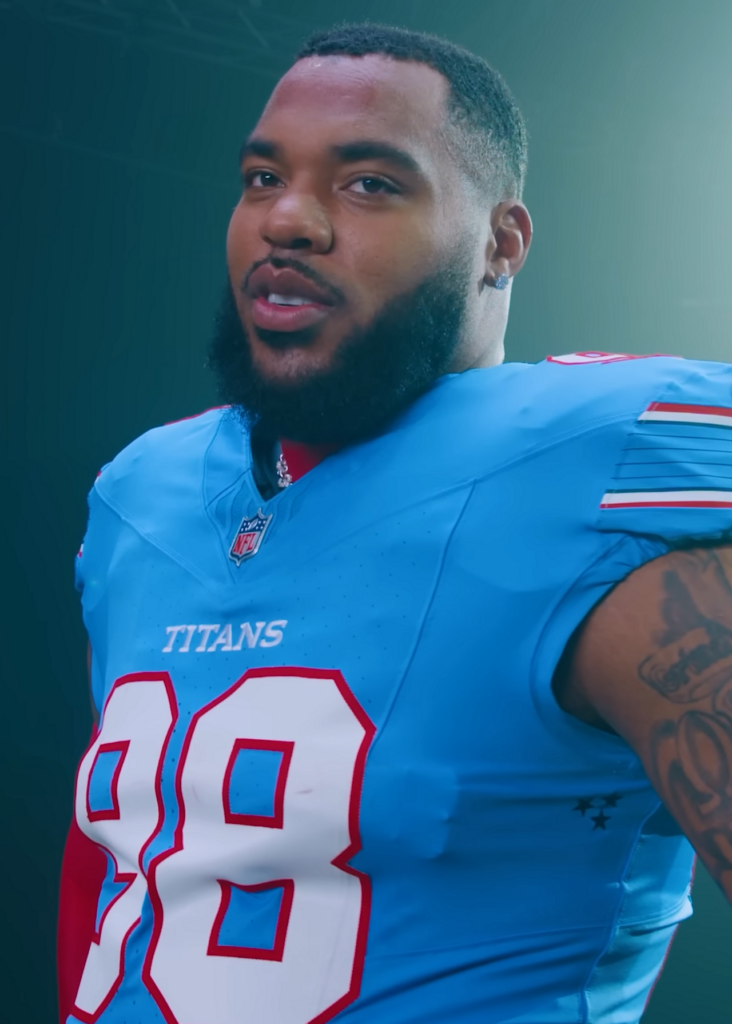
Image: Tennessee Titans / CC BY 4.0, via Wikimedia Commons
Training Split
NFL defensive linemen train on a four-day lifting template during the offseason, with field work layered on top. Simmons’s program follows the structure most interior D-line guys run: two heavy lower-body days, two upper-body days, and explosive work placed first in every session while the nervous system is fresh.
Day 1: Lower Body Power
- Box jumps – 4 sets x 3 reps (max intent, full rest)
- Trap bar deadlift – 5 sets x 3-5 reps
- Back squat – 4 sets x 5 reps
- Bulgarian split squat – 3 sets x 8 reps per leg
- Nordic hamstring curl – 3 sets x 6 reps
- Standing calf raise – 3 sets x 15 reps
Rest between heavy sets runs 2-3 minutes. The point isn’t fatigue. It’s force.
Day 2: Upper Body Push and Press
- Med ball chest pass against wall – 4 sets x 5 reps
- Bench press – 5 sets x 5 reps
- Incline dumbbell press – 4 sets x 8 reps
- Standing overhead press – 4 sets x 6 reps
- Weighted dip – 3 sets x 8 reps
- Landmine press – 3 sets x 10 per side
- Triceps rope pushdown – 3 sets x 12-15 reps
Day 3: Lower Body Strength and Hips
- Hex bar jump – 4 sets x 3 reps
- Front squat – 4 sets x 6 reps
- Romanian deadlift – 4 sets x 8 reps
- Hip thrust – 4 sets x 8 reps
- Lateral sled drag – 4 lengths each direction
- 90/90 hip switches and Cossack squats – 3 sets x 8 per side
Day 4: Upper Body Pull and Grip
- Weighted pull-up – 4 sets x 6 reps
- Barbell row – 4 sets x 8 reps
- Single-arm dumbbell row – 3 sets x 10 per side
- Face pull – 3 sets x 15 reps
- Farmer’s carry – 4 trips x 40 yards
- Rotational cable chop – 3 sets x 10 per side
Pulling volume matters more than most fans realize for a D-tackle. Every bull rush, club-rip, and attempt to shed a guard’s hands comes from the back, lats and grip — not the chest.
Cardio Routine
Simmons doesn’t log long miles. Nobody at 305 pounds should. Defensive line conditioning is built around work-to-rest ratios that mirror a real drive: five to eight seconds of all-out effort, then 30-40 seconds of standing around.
The offseason conditioning block typically looks like sled pushes, 20- and 40-yard shuttles, and gasser sets three days a week, usually 15-25 minutes total after the lift or on separate field days. Low-impact aerobic work — stationary bike, incline treadmill walks, or pool sessions — fills in on recovery days for 20-30 minutes to build the aerobic base without hammering the knees and ankles.
Position-Specific Training
Pass-rush work is its own training category, and he spends serious time on it: get-off drills firing out of a three-point stance on a ball-movement cue, hand-fighting on a heavy bag, and change-of-direction ladders for the counter moves.
His rehab after the 2019 ACL tear is the other piece. The Titans drafted him knowing he’d miss the first six games, and he returned in late October 2019 against the Chargers. That timeline required months of isolated quad and hamstring work, blood-flow restriction training, and a slow-build return to cutting and contact — plus keeping his weight and upper-body strength intact while he couldn’t load his legs normally. He finished that rookie season with 32 tackles and two sacks in nine games.
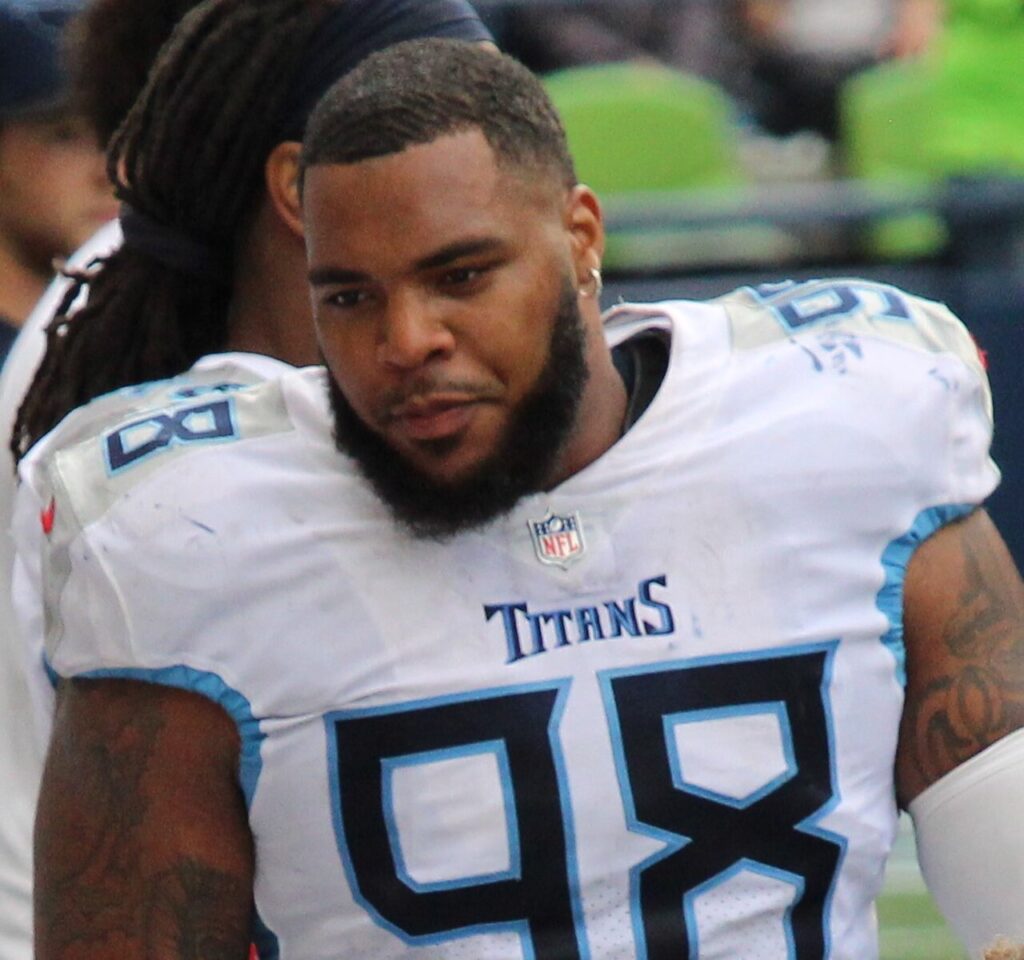
Image: Chipermc / CC BY-SA 4.0, via Wikimedia Commons
Recovery and Flexibility
Simmons has had two knees surgically addressed over his career, so recovery isn’t optional. The standard protocol for NFL interior linemen — and the one the Titans’ sports performance staff runs — includes daily soft-tissue work, cold tub or contrast therapy after practices, and dedicated hip and ankle mobility sessions.
Ankle dorsiflexion is a big one for a D-tackle. If you can’t get into a deep stance and stay there, you can’t get leverage on a guard. Daily banded ankle mobilizations, 90/90 hip work, and couch stretches do more for pass-rush production than another set of bench.
Sleep gets treated as a training variable too. Eight to nine hours is the target during the season, with a nap built into the schedule on practice days when possible.
Personal Trainer
Simmons’s in-season programming runs through the Titans’ strength and conditioning staff. Frank Piraino served as the team’s head strength and conditioning coach from 2018 through the 2023 season, covering Simmons’s first five years and all three of his Pro Bowl campaigns. Like most Mississippi-raised NFL players, Simmons also spends offseason time training back home rather than at a boutique performance facility.
Workout Stats
| Metric | Detail |
|---|---|
| Height / Playing Weight | 6’4″ / approx. 305 lbs |
| Training Frequency | 4 lifting days/week + 3 field days |
| Session Duration | 60-75 minutes |
| Primary Focus | Explosive strength and power output |
| Cardio | Sled pushes, shuttles, gassers — 15-25 min, 3x/week |
| Recovery | Cold tub, soft-tissue work, 8-9 hrs sleep |
| Key Lifts | Trap bar deadlift, front squat, weighted pull-up |
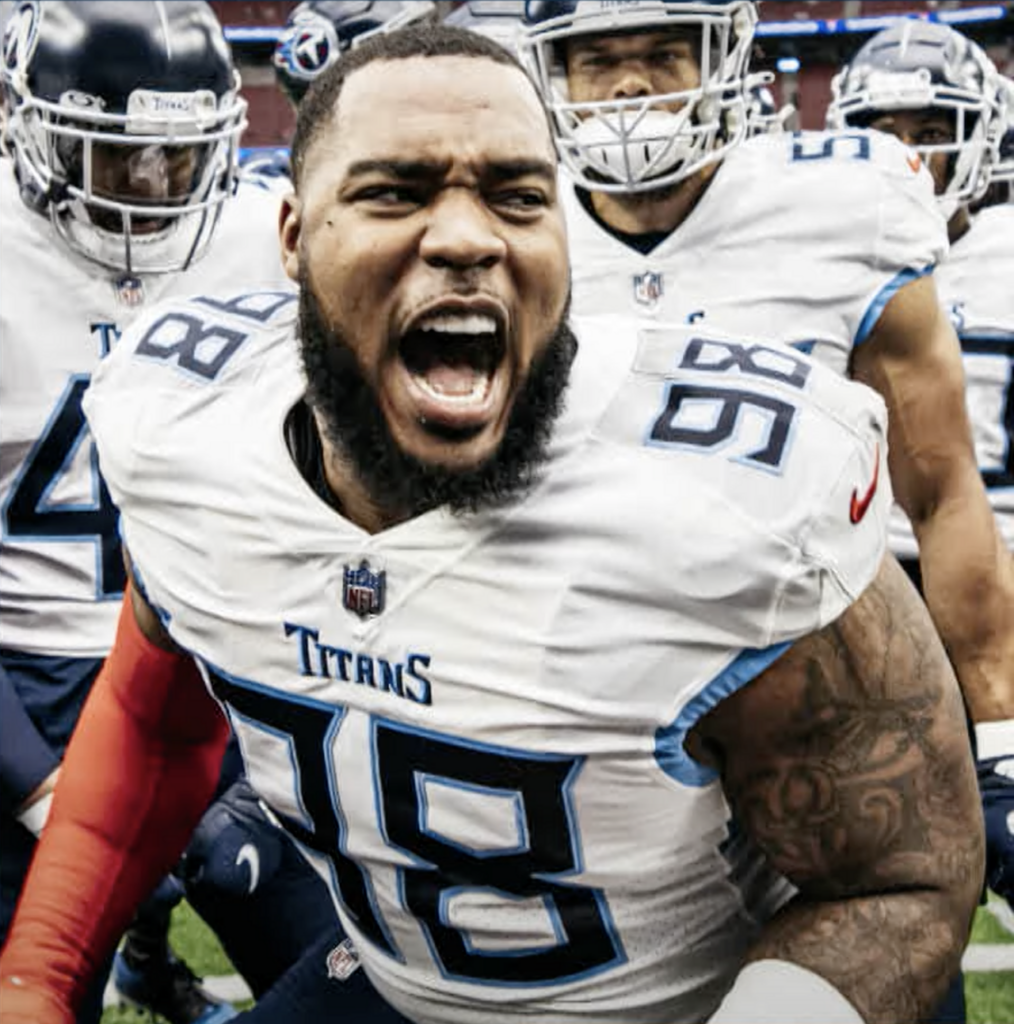
Image: Tennessee Titans / CC BY 3.0, via Wikimedia Commons
How does a 300-pounder move like that? It’s not cardio and it’s not dieting down. It’s heavy triple-digit force production paired with hip and ankle mobility, trained year-round, with recovery treated as seriously as the lifting.
Frequently Asked Questions
How does Jeffery Simmons work out?
Simmons trains on a four-day lifting template with two heavy lower-body days and two upper-body days. Explosive movements like box jumps and med ball throws are placed first in every session while his nervous system is fresh.
How often does Jeffery Simmons train?
He lifts four days a week during the offseason, with on-field speed and position work layered on top of the weight room sessions.
What are Jeffery Simmons’ key exercises?
His staples include trap bar deadlifts (5×3-5), back squats (4×5), bench press (5×5), weighted pull-ups (4×6), hip thrusts, Bulgarian split squats and farmer’s carries at 40 yards per trip.
What is Jeffery Simmons’ cardio routine?
He avoids long-distance running at 305 pounds, relying instead on short, high-intensity bursts and conditioning that mirrors the two-second explosions of interior line play.
How did Jeffery Simmons come back from his ACL tear?
Simmons tore his ACL in February 2019 while prepping for the NFL Combine, was still drafted 19th overall by the Titans, and returned to the field by Week 7 that season, roughly eight months post-surgery.
Why does Jeffery Simmons focus so much on pulling exercises?
Bull rushes, club-rip moves and shedding a guard’s hands come from the back, lats and grip, so he prioritizes barbell rows, single-arm rows, face pulls and loaded carries.
How much rest does Jeffery Simmons take between sets?
He rests 2-3 minutes between heavy sets. The goal of his lifting is maximum force production, not accumulating fatigue.
More Jeffery Simmons Celebrities
Trending Now



Recommended Fitness Gear
Last Updated: November 1, 2026 | Source: Healthy Celeb