Max Verstappen’s Fitness Philosophy
Four world championships, over 60 Grand Prix wins, and a physique that looks nothing like a traditional athlete’s. That’s the odd thing about Max Verstappen — at about 5’11” and around 72 kg, he’s lean to the point of looking underfed next to a footballer or a boxer. But put him in a car pulling 6G through Suzuka’s Esses for 53 laps and you understand what he’s built for.
Verstappen has been open about not being a gym rat. He’s said more than once that he doesn’t particularly enjoy lifting weights and would rather be on a bike or in a sim rig. What he does do is train with ruthless specificity. F1 has a minimum combined weight for driver and seat (82 kg under current rules), and Verstappen is tall for the grid, so bulking up costs him lap time. His training builds just enough strength in exactly the right places — neck, core, forearms, shoulders — while keeping his aerobic engine strong enough to handle 90 minutes in a 50°C cockpit.
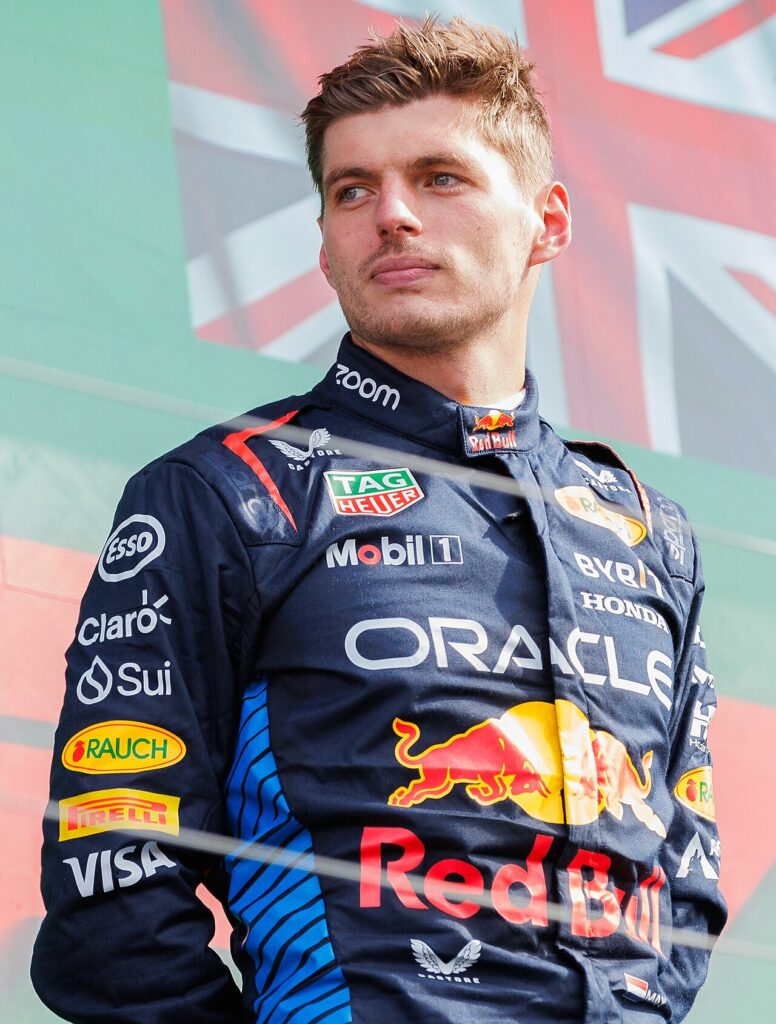
Image: Steffen Prößdorf / CC BY-SA 4.0, via Wikimedia Commons
Training Split
During the season he trains most days, but sessions are short and front-loaded around travel. Between races he stacks heavier work at his Monaco base. The split below reflects the structure he and his performance coaches have described — neck work appears almost every session, because it has to.
Day 1: Neck and Upper Body Pull
- Neck harness lateral holds (each side) – 4 sets x 30-45 sec
- Four-way isometric neck presses (partner or band resistance) – 3 sets x 20 sec per direction
- Weighted pull-ups – 4 sets x 6-8 reps
- Single-arm dumbbell row – 3 sets x 10-12 reps per side
- Face pulls – 3 sets x 15 reps
- Farmer’s carry – 4 sets x 40 m
Rest: 60-90 seconds between strength sets, 30 seconds between neck sets.
Day 2: Cycling Endurance
- Road ride through the hills behind Monaco – 90-120 minutes at steady zone 2 effort
- Finish with 3 x 5 min threshold climbs
Day 3: Lower Body and Core
- Neck harness flexion/extension – 3 sets x 12-15 reps
- Rear-foot elevated split squat – 3 sets x 10 reps per leg
- Romanian deadlift – 4 sets x 8 reps
- Single-leg press (braking-leg emphasis) – 3 sets x 12 reps
- Pallof press – 3 sets x 12 per side
- Side plank with reach-through – 3 sets x 45 sec per side
- Hanging leg raise – 3 sets x 15 reps
Day 4: Interval Cardio
- Running or assault bike – 8 x 60 sec hard / 90 sec easy
- Rower finisher – 500 m x 3, 2 min rest
Day 5: Upper Body Push, Grip and Reaction
- Neck isometrics with helmet and resistance band – 4 sets x 30 sec per direction
- Incline dumbbell press – 4 sets x 8-10 reps
- Landmine shoulder press – 3 sets x 10 reps
- Cable chest fly – 3 sets x 12-15 reps
- Wrist curls and reverse wrist curls – 3 sets x 20 reps each
- Plate pinch hold – 3 sets to failure
- Reaction light board drills – 10 x 30 sec
Day 6: Long Aerobic Session and Mobility
Two-hour ride or a 10 km easy run, followed by 20-30 minutes of mobility and thoracic rotation work.
Day 7: Rest and Sim Racing
Verstappen’s “rest day” usually involves hours on his simulator with Team Redline. He treats it as reaction and concentration training rather than recreation — and has used it as genuine race prep, including competing in virtual endurance events.
Cardio Routine
Cycling is the cornerstone. Verstappen rides the climbs around Monaco and the Côte d’Azur year-round, typically 3-4 sessions a week ranging from 60 minutes to over two hours, with running and rowing filling in the interval work. The goal isn’t marathon fitness — it’s keeping his resting heart rate low so that when race-day average heart rate sits around 160-170 bpm for an hour and a half, he’s still making clean decisions on lap 50.
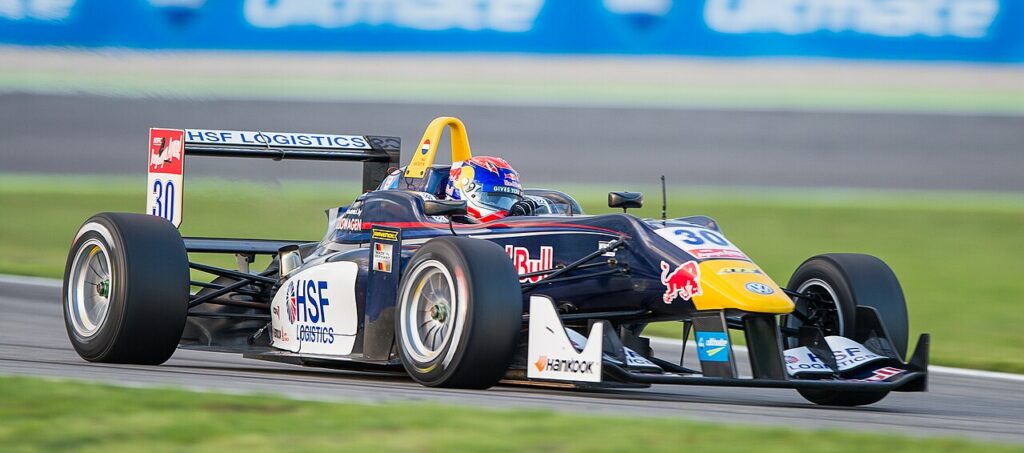
Image: Stefan Brending (2eight) / CC BY-SA 3.0 de, via Wikimedia Commons
Race-Specific Training
Neck and G-force prep: Under 5-6G of lateral load, a helmet and HANS device weighing around 7 kg behaves like 35-40 kg hanging off the side of your skull. Verstappen builds up neck work in the weeks before high-load circuits like Suzuka, Silverstone, Qatar and Zandvoort, using harness holds, band isometrics and partner-resisted presses. He’s called neck training the one thing you genuinely cannot skip.
Heat acclimatisation: Ahead of Singapore and Qatar, where cockpit temperatures push past 50°C and drivers can lose 3 kg of fluid in a race, he ramps up sauna sessions and trains in heavier kit. The 2023 Qatar Grand Prix — where several drivers needed medical attention — was a reminder of why that block matters.
Off-season: December through February is when the heavier strength work goes in, before volume drops and maintenance takes over once testing begins.
Recovery and Flexibility
Recovery is hands-on physio more than anything trendy. His performance coach travels with him and works on his neck, shoulders and lower back before and after every session in the car. Add contrast showers, sauna, compression and a genuine commitment to sleep — he’s called protecting sleep across brutal triple-headers and time-zone swings the single biggest performance lever. Mobility work focuses on thoracic rotation and hip flexors, both of which seize up from sitting in a reclined seat with legs raised.
Personal Trainer
Rupert Manwaring has been Verstappen’s performance coach and physiotherapist since 2023, taking over from Bradley Scanes, who worked with Max through the 2021 and 2022 title-winning seasons before moving to Mercedes. Earlier, Verstappen worked with Jake Aliker during his Toro Rosso and early Red Bull years. The consistent thread: minimal bulk, maximum neck and core, and relentless attention to recovery between races.
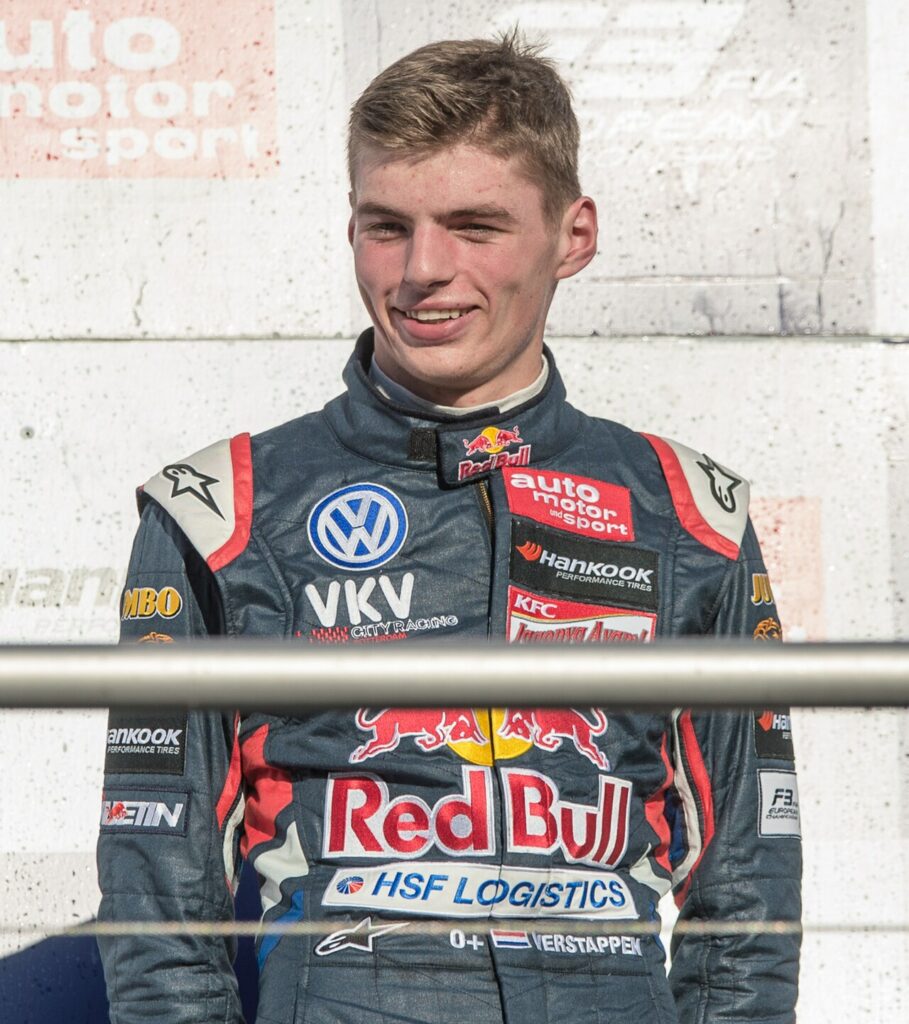
Image: Stefan Brending (2eight) / CC BY-SA 3.0 de, via Wikimedia Commons
Workout Stats
| Metric | Detail |
|---|---|
| Training Frequency | 6 days/week |
| Session Duration | 45-90 minutes |
| Primary Focus | Functional strength, neck conditioning, aerobic endurance |
| Cardio | Cycling, running, rowing – 60-120 min, 4x/week |
| Neck Work | 4-5 sessions/week, 10-15 min each |
| Height / Weight | 5’11” / approx. 72 kg |
Frequently Asked Questions
How does Max Verstappen work out?
He trains with ruthless specificity rather than bodybuilding, focusing on neck, core, forearms and shoulders while keeping his aerobic base high. His week mixes short strength sessions with long cycling rides and interval cardio.
How often does Max Verstappen train?
During the season he trains most days, but sessions are short and scheduled around travel. Between races he stacks heavier work at his Monaco base.
Who trains Max Verstappen?
Verstappen works with dedicated F1 performance coaches who design his race-week programming. They build his split around near-daily neck conditioning, since that is non-negotiable for cockpit G-forces.
What are Max Verstappen’s key exercises?
Neck harness lateral holds and four-way isometric neck presses appear in almost every session, alongside weighted pull-ups, single-arm dumbbell rows, farmer’s carries, Romanian deadlifts, Pallof presses and plate pinch holds.
What cardio does Max Verstappen do?
He prefers cycling to the gym, riding 90 to 120 minutes in the hills behind Monaco at zone 2 with threshold climbs. He also does 8 x 60-second hard intervals on the assault bike or running, plus 500 m rowing finishers.
Does Max Verstappen lift heavy weights?
No. F1’s 82 kg minimum driver-and-seat weight means bulking costs him lap time, so at around 5’11” and 72 kg he builds just enough strength in the right places.
Does Max Verstappen take rest days?
Yes. His week ends with a long aerobic ride or easy 10 km run followed by 20-30 minutes of mobility, with at least one genuine recovery day built in around travel.
More Max Verstappen Celebrities

Trending Now



Recommended Fitness Gear
Last Updated: October 6, 2026 | Source: Healthy Celeb