Formula 1 driver height and weight
Formula 1 is the only major sport where being tall is an actual, measurable disadvantage. Every kilogram a driver carries is a kilogram the car has to drag around 70-odd laps, and cockpits are built to a fixed template. So the grid has always skewed small, lean, and brutally disciplined about food.
The FIA tried to fix the worst of it. Since 2019 there’s been a separate minimum for the driver plus seat — originally 80 kg, lifted to 82 kg for 2025 and carried into the new rules era. Anything under that gets made up with ballast bolted low in the cockpit, so a 54 kg driver no longer gets a free aerodynamic gift over a 75 kg one. With 2026 cars dropping to a 768 kg minimum and running smaller, lighter chassis, driver measurables are back in the conversation.
Here’s where 10 of the most recognizable names on and off the current grid actually land.
1. Max Verstappen
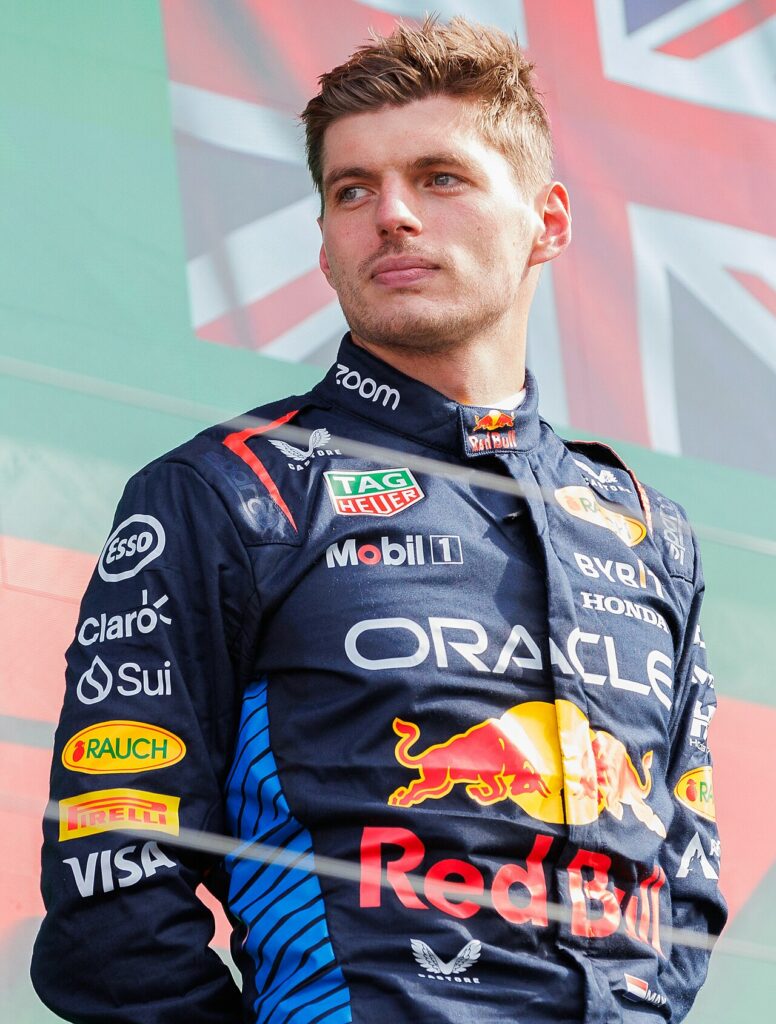
Image: Steffen Prößdorf / CC BY-SA 4.0, via Wikimedia Commons
Verstappen stands 1.81 m (5 ft 11) and races at about 72 kg (159 lbs) — right about the sweet spot for a modern F1 car. Tall enough to get decent leverage, light enough that his team isn’t fighting the weight limit.
He debuted in Melbourne in 2015 at 17 years old, then won four straight drivers’ titles from 2021 to 2024. His conditioning is handled by physio Bradley Scanes, with a heavy emphasis on neck work — F1 drivers pull sustained 5G in high-speed corners, and the helmet alone adds a few kilos of load.
2. Yuki Tsunoda
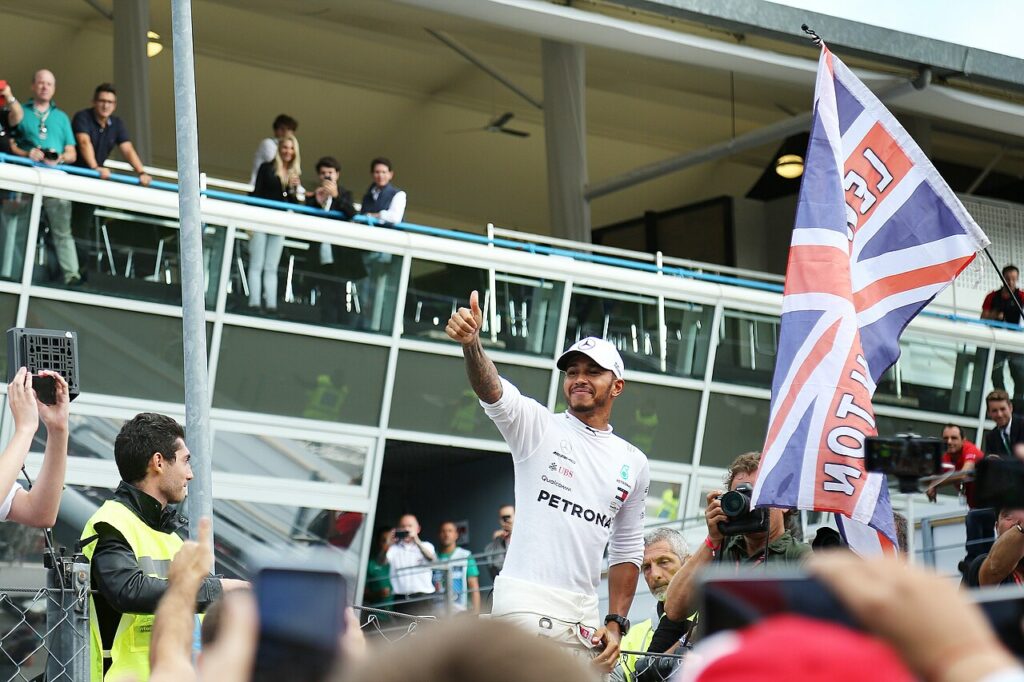
Image: https://www.flickr.com/photos/78475089@N02/ / CC BY-SA 2.0, via Wikimedia Commons
The smallest man on the grid by a wide margin. Tsunoda is listed at 1.59 m (5 ft 2.5) and around 54 kg (119 lbs) — nearly 30 cm shorter than the tallest drivers out there.
Under the old rules that would’ve been a huge advantage. Under the current driver-plus-seat minimum, it just means more ballast. Tsunoda has spoken openly about needing to add muscle rather than stay featherweight, and he was promoted into the senior Red Bull seat two races into 2025.
3. Esteban Ocon
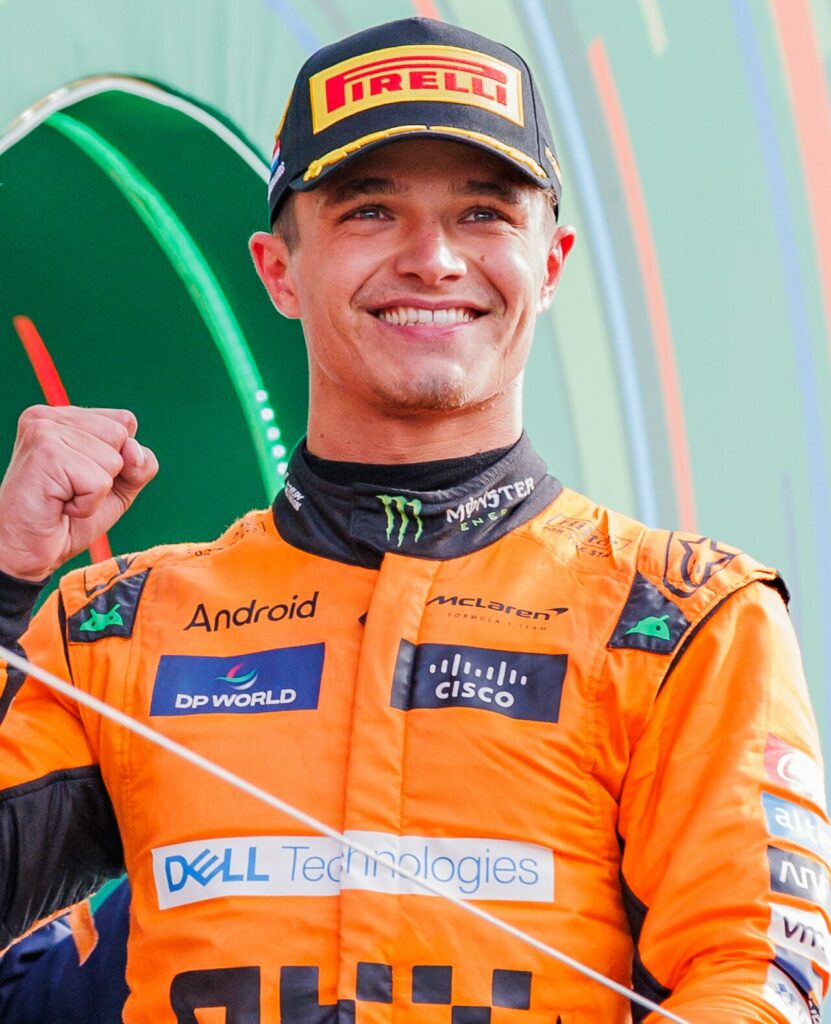
Image: Original: Steffen Prößdorf; Derivative work: Mb2437 / CC BY-SA 4.0, via Wikimedia Commons
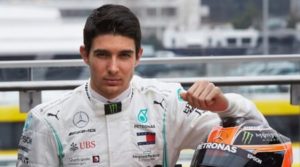
At 1.86 m (6 ft 1), Ocon is one of the two tallest drivers in the field, level with Alexander Albon. He races at about 66 kg (146 lbs), which is remarkably light for that frame — and that’s the point.
Ocon has been candid about the dieting required to stay competitive at his height, something he’s dealt with since his junior career. He joined Haas for 2025 after four seasons with Alpine, where he won the 2021 Hungarian Grand Prix.
4. Lewis Hamilton
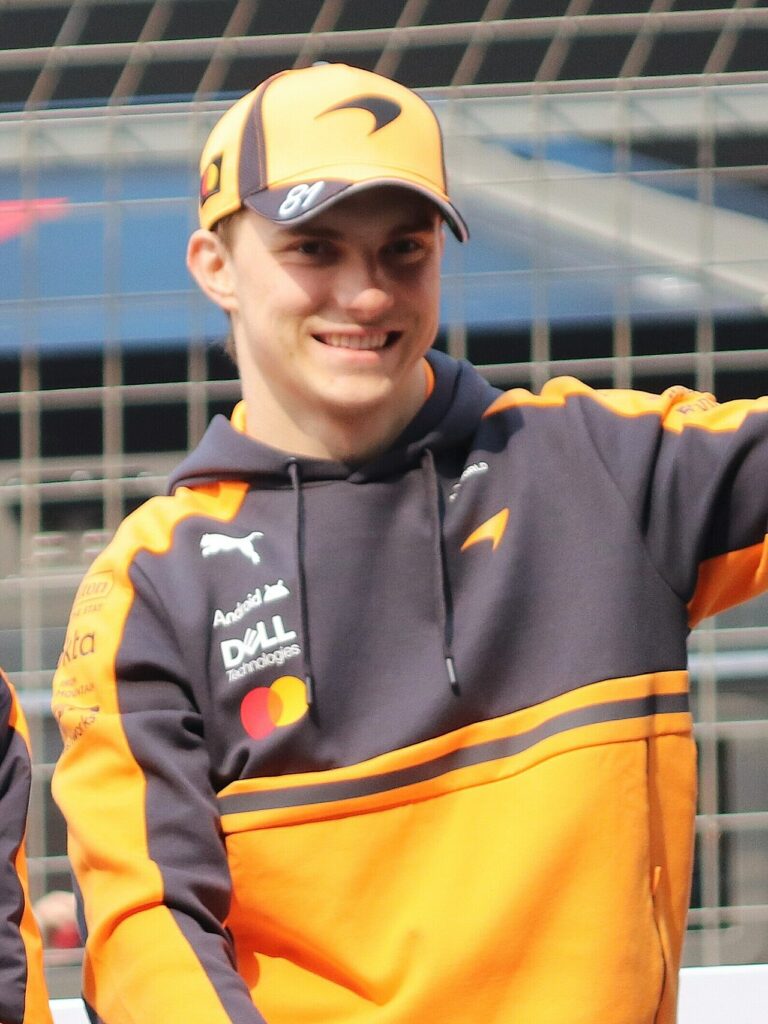
Image: Liauzh / CC BY 4.0, via Wikimedia Commons
Hamilton measures 1.74 m (5 ft 8.5) and sits around 73 kg (161 lbs) — one of the heavier drivers, largely because he carries more upper-body muscle than most of the grid.
He’s been on a plant-based diet since 2017 and trains year-round with running, cycling, and resistance work rather than crash-cutting between races. Seven world titles, and he swapped Mercedes for Ferrari ahead of the 2025 season.
5. George Russell
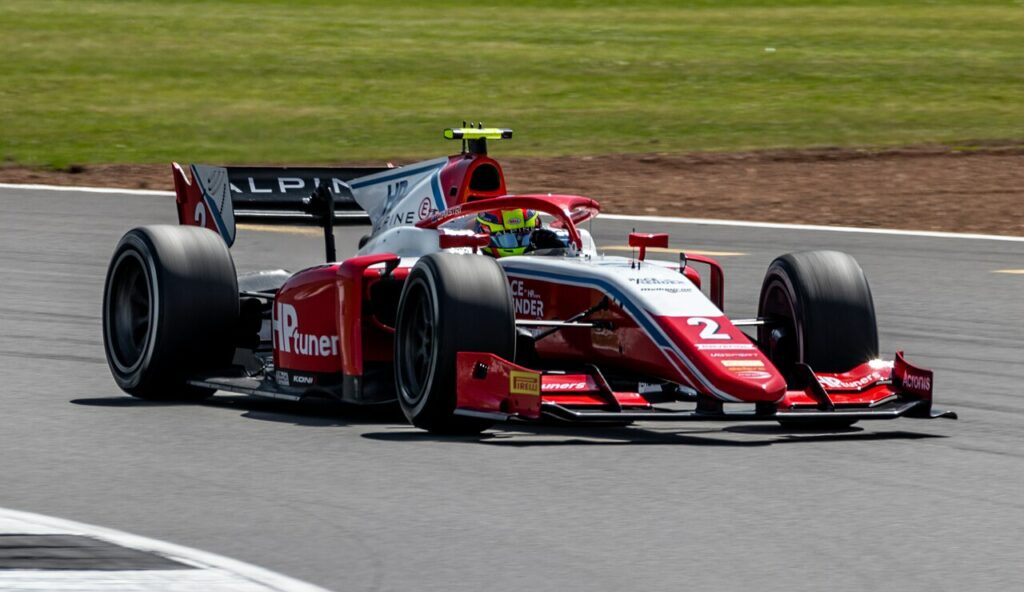
Image: Jen Ross / CC BY 2.0, via Wikimedia Commons
Russell is 1.85 m (6 ft 1) and about 70 kg (154 lbs). He’s spent his entire career managing the tall-and-light problem, and has said publicly that he’s had to run leaner than is comfortable to hit target weights.
He took his first win at the 2022 São Paulo Grand Prix and has been Mercedes’ team leader since Hamilton’s exit.
6. Lando Norris
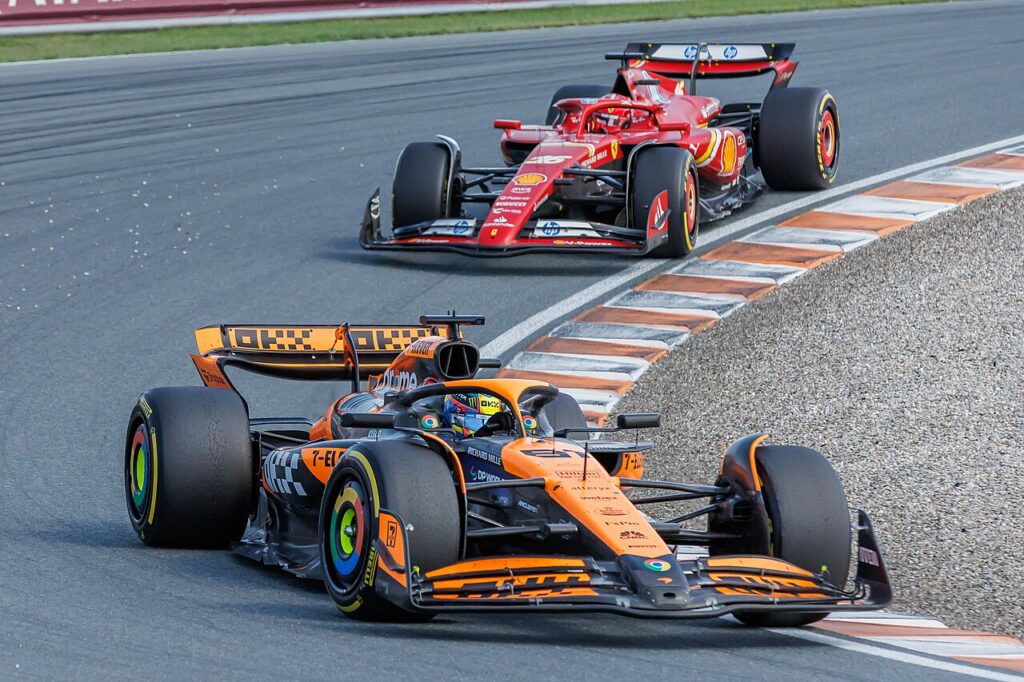
Image: Steffen Prößdorf / CC BY-SA 4.0, via Wikimedia Commons
Norris is one of the shorter drivers at 1.70 m (5 ft 7), weighing about 68 kg (150 lbs). Compact build, very low body fat, and a cycling-heavy training base.
He’s also been vocal about mental health and fatigue management across a 24-race calendar. His first F1 win came at Miami in 2024, five years into his McLaren career.
7. Charles Leclerc
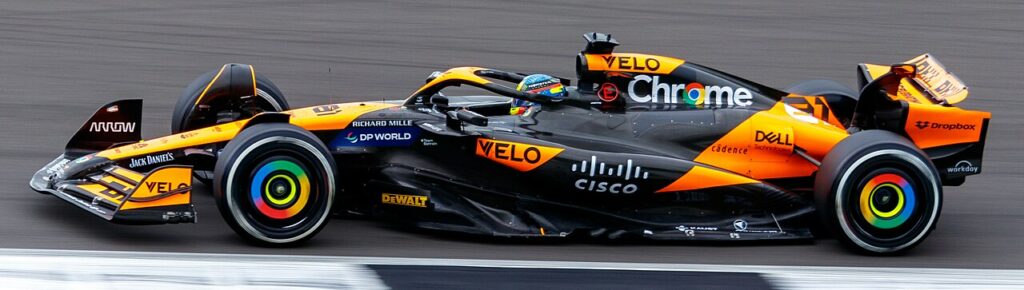
Image: Jen Ross / CC BY 2.0, via Wikimedia Commons
Leclerc stands 1.80 m (5 ft 11) and races at around 69 kg (152 lbs) — a textbook modern F1 build. Lean, long-limbed, nothing wasted.
The Monégasque finally won his home race in 2024 after years of near-misses there. He’s been with Ferrari since 2019.
8. Oscar Piastri
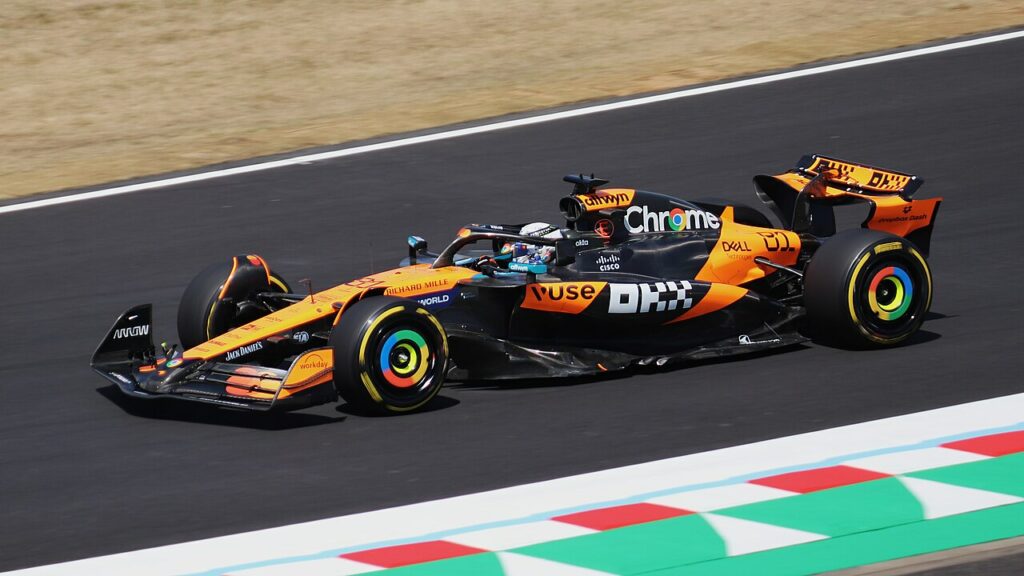
Image: Liauzh / CC BY-SA 4.0, via Wikimedia Commons
Piastri is listed at 1.78 m (5 ft 10) and around 68 kg (150 lbs). He arrived in F1 in 2023 after sweeping Formula Renault Eurocup, F3, and F2 titles in consecutive seasons — a rare clean run.
His first Grand Prix win came in Hungary in 2024, and he’s been in the championship conversation since.
9. Fernando Alonso
Alonso is 1.71 m (5 ft 7) and about 68 kg (150 lbs). Born in July 1981, he’s by far the oldest driver on the grid and still one of the fittest — he’s completed triathlons and cycles obsessively in the off-season.
Two world titles in 2005 and 2006, plus wins at Le Mans and the Daytona 24 Hours. The physical standard he holds in his 40s is the outlier stat here, not his height.
10. Michael Schumacher
Schumacher raced at 1.74 m (5 ft 8.5) and around 75 kg (165 lbs) — heavy by today’s standards, but he’s the man who changed how F1 drivers train. Before him, fitness was an afterthought. He turned it into a weapon.
Seven titles, 91 wins, and a conditioning program built on football, running, and relentless neck training that every driver on this list inherited some version of.
The pattern is clear: most of the grid lands between 1.70 m and 1.86 m, with racing weights clustered in the 66–74 kg band. Taller drivers pay for it in diet discipline, shorter ones carry ballast instead. The rules have narrowed the gap, but in a sport decided by hundredths, nobody’s ignoring the scale.
Frequently Asked Questions
Who is the shortest Formula 1 driver on the grid?
Yuki Tsunoda is the shortest by a wide margin at 1.59 m (5 ft 2.5) and around 54 kg (119 lbs). That is nearly 30 cm shorter than the tallest drivers in the field.
Who is the tallest F1 driver?
Esteban Ocon and Alexander Albon share the title at 1.86 m (6 ft 1). Ocon races at roughly 66 kg (146 lbs), which is extremely light for that frame.
What is the minimum weight for an F1 driver?
Since 2019 the FIA has enforced a separate driver-plus-seat minimum, originally 80 kg and raised to 82 kg for 2025 and the new rules era. Anything under that is made up with ballast bolted low in the cockpit.
How tall and heavy is Max Verstappen?
Verstappen stands 1.81 m (5 ft 11) and races at about 72 kg (159 lbs), close to the sweet spot for a modern F1 car. He won four straight drivers’ titles from 2021 to 2024.
Why is being tall a disadvantage in Formula 1?
Cockpits are built to a fixed template and every extra kilogram is weight the car must drag around for roughly 70 laps. That is why the grid has always skewed small, lean and strict about diet.
Does driver weight still matter in 2026?
Yes. With 2026 cars dropping to a 768 kg minimum and running smaller, lighter chassis, driver measurables are back in the conversation despite the 82 kg driver-and-seat rule.
More Esteban Ocon Celebrities


Trending Now



Last Updated: October 6, 2026 | Source: Healthy Celeb