This article contains affiliate links. We may earn a small commission if you purchase through these links, at no extra cost to you.
Harry Kane’s Diet Overview
Harry Kane is one of the most clinical strikers of his generation — England’s all-time leading goalscorer, Tottenham’s record scorer, and since 2023 the main man at Bayern Munich. But the version of Harry Kane scoring at a goal-a-game clip in the Bundesliga is a physically different athlete from the one who kept breaking down with ankle injuries in his early twenties.
Kane rebuilt his body in his mid-twenties, and food was a big chunk of it. Around 2017 he started assembling what the British press nicknamed “Team Kane” — a personal physio, a sports scientist, a sleep consultant, a cryotherapy chamber at home, and a chef preparing his meals. The widely reported changes: cutting red meat almost entirely, slashing refined sugar, and timing carbohydrates around matches instead of eating the same way every day. He got his body fat into the single digits and kept it there through his thirties.
Kane stands 6 ft 2 in (188 cm) and plays at about 86 kg (190 lbs). He’s not a sprinter’s build — he’s a big, heavy, link-up striker who has to hold off centre-backs for 90 minutes and still finish from 18 yards in the 89th minute. His nutrition reflects that: enough fuel to cover 10-11 km a match, enough protein to keep muscle on a frame that gets battered weekly.
Worth being upfront: Kane has never published a day-by-day meal plan. What follows is built from his own interview comments, reporting on his chef-prepared setup, and standard elite football nutrition protocols that his described approach fits into.
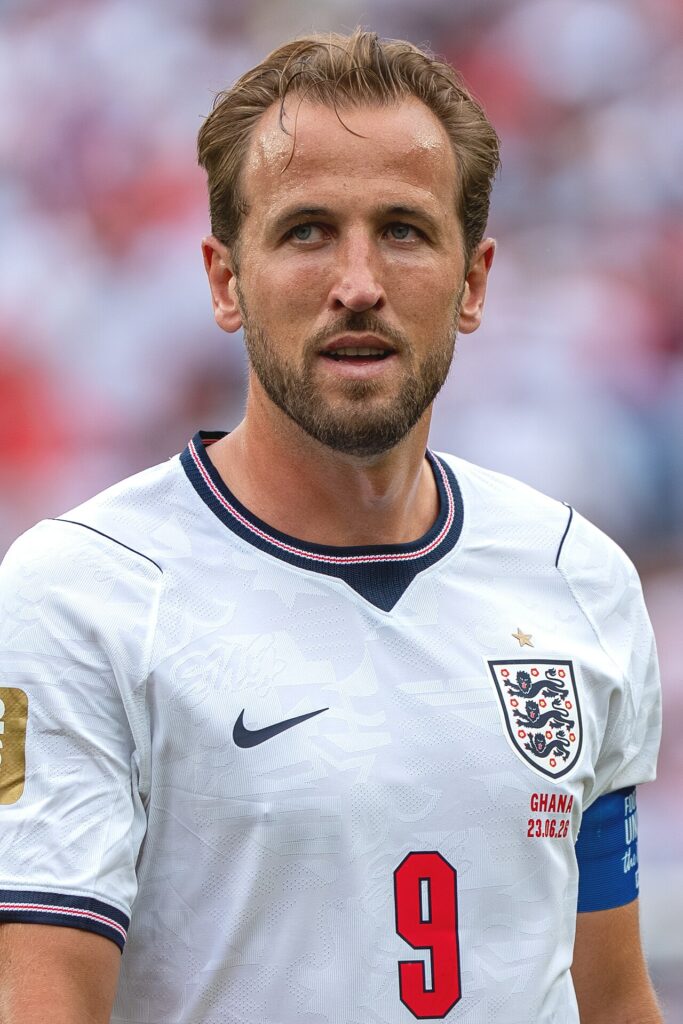
Image: Bryan Berlin / CC BY-SA 4.0, via Wikimedia Commons
What Harry Kane Eats in a Day
Breakfast
Early and substantial: three to four scrambled or poached eggs with smoked salmon or turkey, plus sourdough or porridge made with oats and berries. On a match day or the day before, the oats get bigger and honey or banana goes in. On a recovery day, the carb portion shrinks in favour of protein and avocado. Black coffee or green tea on the side.
Mid-Morning Snack
Pre-training fuel: Greek yoghurt with berries and honey, or a banana with a handful of almonds. If the session is heavy, a carbohydrate drink or rice cakes with nut butter. Kane is reportedly strict about hydration — electrolyte water throughout the morning rather than chugging a litre right before training.
Lunch
The biggest meal most days, eaten within an hour of finishing training. Grilled chicken breast or white fish — sea bass, cod, salmon — with basmati or jasmine rice, sweet potato, and green vegetables: broccoli, spinach, asparagus. Olive oil for fat. Portions scale to training load, which is the point of the carb-cycling setup: heavy day, 150-200g of cooked rice; light day, half that and more salad.
Afternoon Snack
A whey protein shake after gym work, or cottage cheese with pineapple. Sometimes a smoothie — banana, berries, almond milk, protein powder, a spoon of oats. Kane’s reported sugar cut means no syrup-loaded energy bars and no fruit juice by the glass.
Dinner
Lighter on carbs than lunch unless there’s a match the next day. Grilled fish, chicken or turkey with roasted vegetables, quinoa, or sweet potato. Red meat is largely off the menu — the reported reasoning was digestion and inflammation rather than any ethical stance. Before a match, dinner flips to a proper carb load with pasta or rice and a lean protein, eaten early enough to clear.
Evening / Before Bed
Casein-heavy and small: Greek yoghurt, cottage cheese, or a casein shake to drip-feed protein overnight. Kane works with a sleep specialist and treats sleep as part of recovery, so late heavy meals and caffeine after mid-afternoon are out. Tart cherry juice shows up in a lot of Premier League and Bundesliga recovery protocols for the same reason.
Diet Rules and Principles
Kane doesn’t follow a named diet. No keto, no intermittent fasting, no veganism. What he does follow is carbohydrate periodisation — matching carb intake to the day’s workload. Match day and the day before are high-carb; recovery days and light sessions are low. That’s the standard model in top-flight football, and the single biggest reason his body composition held steady while his output went up.
The other pillars, as reported:
- Minimal red meat — chicken, turkey and fish do the heavy lifting.
- Refined sugar cut hard — no fizzy drinks, no desserts on work days.
- Chef-prepared meals so portions and ingredients are controlled, not guessed.
- Alcohol basically nil in-season. Kane famously turned up to Oktoberfest in 2023 and kept it low-key.
- Hydration tracked, with weigh-ins around training to monitor fluid loss.
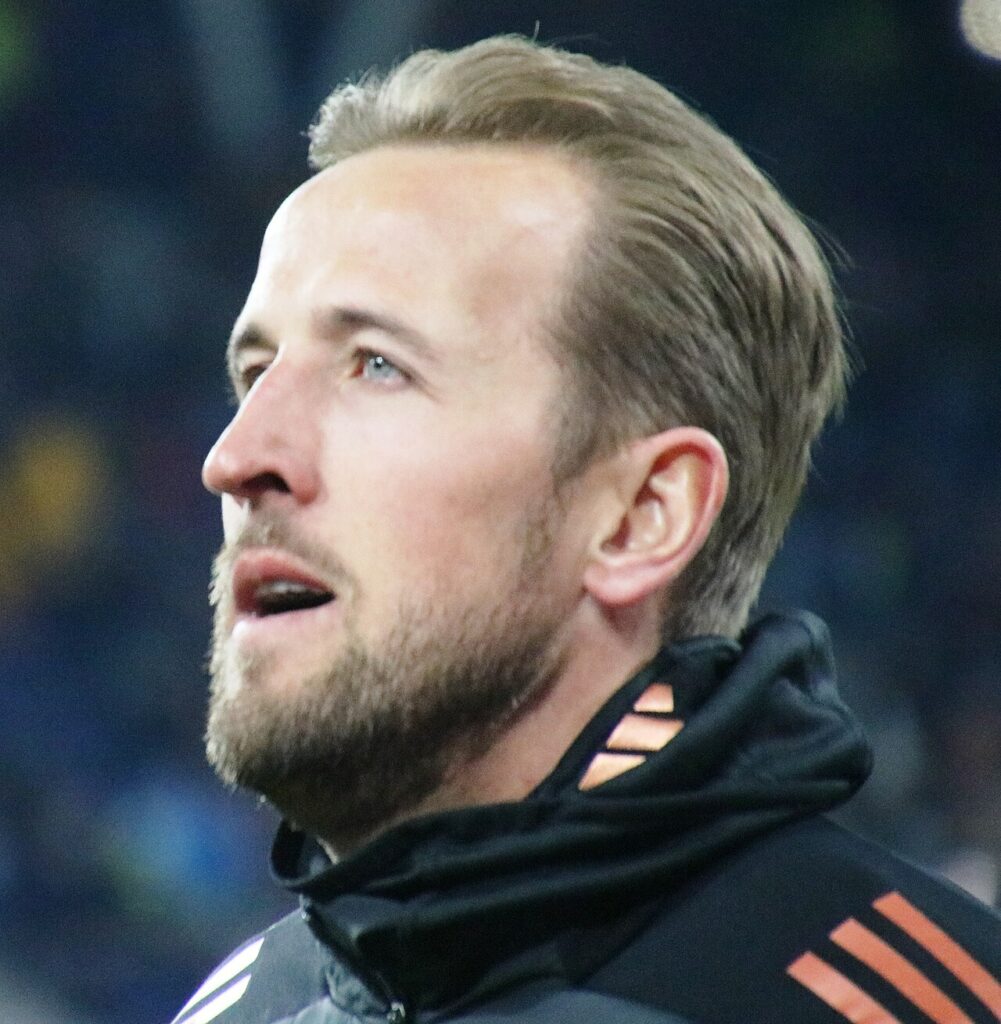
Image: Werner100359 / CC BY-SA 4.0, via Wikimedia Commons
Supplements
Kane has never detailed his stack publicly, and elite clubs keep this tight for anti-doping reasons. Standard across Bayern and the England setup — and implied by his routine — is whey or casein protein, vitamin D (near-universal for players in northern Europe through winter), omega-3 for joints and inflammation, magnesium for sleep and cramping, and electrolyte/carbohydrate drinks during matches. creatine is used by some footballers but Kane hasn’t confirmed it. Everything at this level is batch-tested and signed off by club medical staff.
Cheat Meals and Indulgences
Kane isn’t a monk about it. Off-season and on genuine rest days, the rules loosen — a Sunday roast, a pizza, dessert with the family. He’s spoken about enjoying normal food with his wife Kate and their four kids, and he’s a huge NFL fan who likes a trip to the States. The discipline is in-season; June and July are when he lets it slide, then pre-season claws it back.
Estimated Daily Macros
| Nutrient | Amount |
|---|---|
| Calories | ~3,400 kcal (match day), ~2,800 kcal (recovery day) |
| Protein | ~175g |
| Carbohydrates | ~420g (match day) / ~230g (recovery day) |
| Fat | ~85g |
Expert Verdict
Strip away the chef and the cryo chamber and Kane’s diet is genuinely sensible: lean protein, whole-food carbs, vegetables at every meal, almost no added sugar, minimal booze. Nothing extreme, nothing that requires a supplement cupboard. The carb cycling is the only piece that needs adjusting for a normal person — Kane eats 400g of carbs because he runs 11 km under floodlights, not because carbs are magic.
Scale the calories to your own output and this is a template most people could run for years. The red-meat cut is optional. The sugar cut isn’t the worst idea anyone’s had.
Frequently Asked Questions
What does Harry Kane eat in a day?
Kane typically starts with three to four eggs with smoked salmon or turkey plus porridge or sourdough, snacks on Greek yoghurt or a banana with almonds, and eats grilled chicken or white fish with rice, sweet potato and greens for lunch. Afternoon fuel is a whey shake, smoothie or cottage cheese.
What does Harry Kane eat for breakfast?
An early, substantial breakfast of three to four scrambled or poached eggs with smoked salmon or turkey, plus sourdough or oats and berries. On match days the oats get bigger with honey or banana added, washed down with black coffee or green tea.
What foods does Harry Kane avoid?
He cut red meat almost entirely and slashed refined sugar, avoiding syrup-loaded shakes and sweetened snacks. His protein comes mainly from eggs, chicken, white fish, salmon and dairy instead.
Does Harry Kane use supplements?
He reportedly uses whey protein shakes after gym sessions, plus carbohydrate drinks around heavy training and electrolyte water for hydration throughout the day.
Does Harry Kane have cheat meals?
Kane has never published a strict day-by-day plan, but his approach is built on consistency rather than total restriction, with carb portions scaled up around matches rather than treated as cheat days.
What is Harry Kane’s diet philosophy?
Carb cycling around training and match load — bigger rice and oat portions on heavy days, smaller ones on recovery days — with steady protein to maintain muscle on his 6 ft 2 in, 86 kg frame and keep body fat in single digits.
More Harry Kane Celebrities

Trending Now



Recommended Fitness Gear
Last Updated: October 8, 2026 | Source: Healthy Celeb