This article contains affiliate links. We may earn a small commission if you purchase through these links, at no extra cost to you.
Alexia Putellas’s Diet Overview
Alexia Putellas has spent most of the last decade as the face of Spanish women’s football — two Ballon d’Or Féminin trophies (2021 and 2022), a World Cup winner’s medal in 2023, and more appearances for Barcelona than any player in the club’s history. She’s also one of the few elite athletes who has had to rebuild her body twice: once as a teenager breaking into the professional game, and again after rupturing the ACL in her left knee in July 2022, two days before Spain’s opening match at Euro 2022.
That second rebuild is what makes her nutrition interesting. Putellas stands 5 ft 8 (1.73 m) and plays at about 62 kg — lean, but not skinny. She’s a deep-lying creator who covers 9 to 10 km a match with repeated high-intensity bursts, so her fuel demands sit much closer to a midfield engine than a sprinter. And she’s Catalan, so the foundation was Mediterranean long before any sports scientist got involved.
A warning up front: Putellas has never published a day-by-day meal plan. What follows is built from her own comments about her ACL recovery, Barcelona’s well-documented club nutrition approach under the Ciutat Esportiva Joan Gamper staff, and standard practice for elite women’s football. Treat it as a representative day, not a leaked PDF.
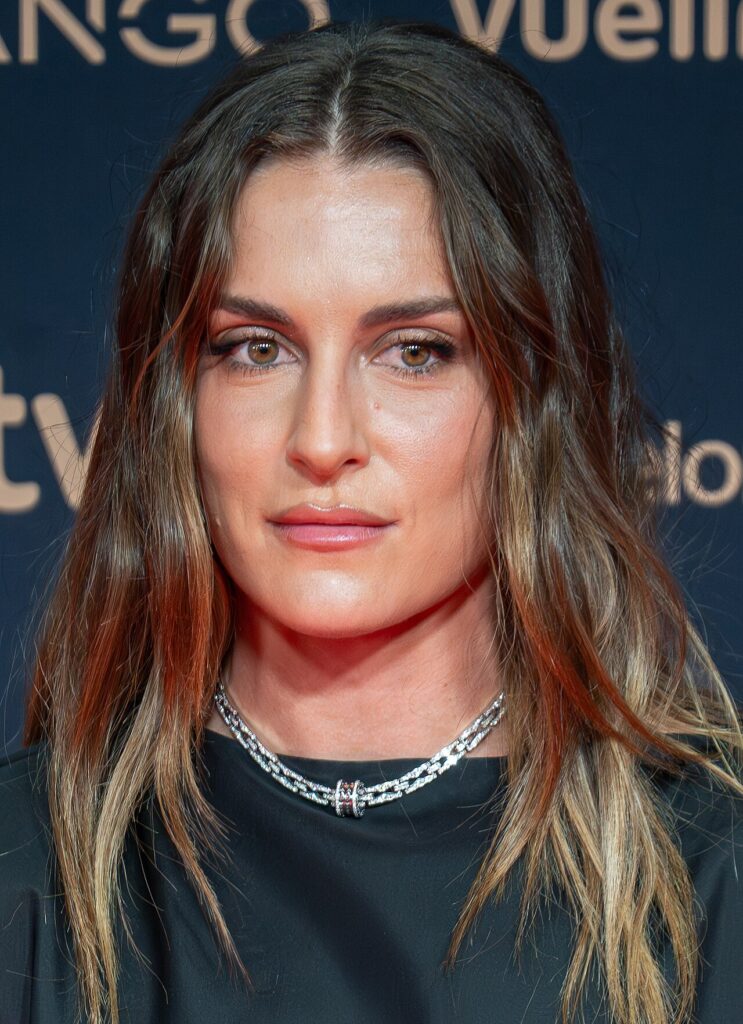
Image: Pedro J Pacheco / CC BY-SA 4.0, via Wikimedia Commons
What Alexia Putellas Eats in a Day
Breakfast
Breakfast at Barça is eaten at the training ground more often than at home, built around slow carbs and protein: 2–3 whole eggs or a tortilla francesa, wholegrain toast with tomato and olive oil (pa amb tomàquet is non-negotiable in Catalonia), plain Greek yoghurt with honey and berries, and fruit. Coffee — cortado, usually. Call it 600–700 calories with around 35g of protein.
On heavy training mornings the carb portion goes up: more bread, oats, maybe a banana on top. On lighter days it shrinks.
Mid-Morning Snack
Something small between the gym block and pitch work: a banana, a handful of almonds or walnuts, or a yoghurt. After a hard strength session, a whey shake or protein-fortified smoothie goes in within the hour. Hydration matters more here than food — electrolyte water through the whole morning block.
Lunch
The biggest meal of the day and the most obviously Spanish. A base of rice, pasta or potato, a palm-and-a-half of grilled protein (chicken, turkey, hake, salmon, tuna), and a large salad or cooked vegetable side dressed in extra virgin olive oil. Lentils or chickpeas appear at least twice a week — legumes are a staple of Catalan home cooking and do double duty as carbs and fibre.
Olive oil is used liberally. It’s the main fat source across the whole plan.
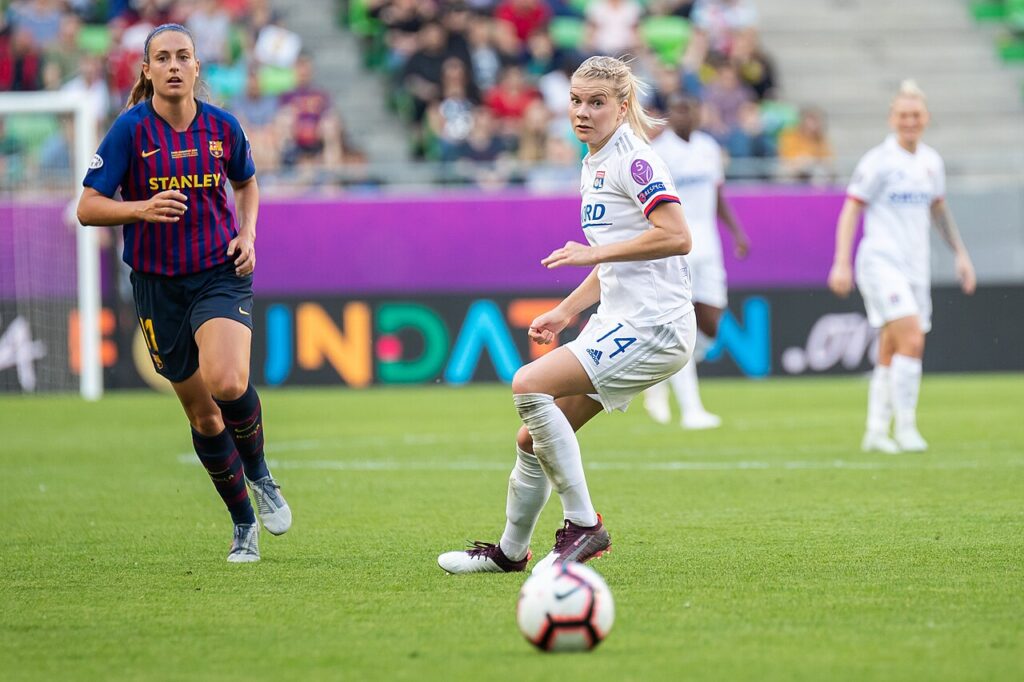
Image: Steffen Prößdorf / CC BY-SA 4.0, via Wikimedia Commons
Afternoon Snack
The Spanish merienda: fruit, a small bocadillo with turkey or tuna, or yoghurt with nuts. Before an evening session or a match, this is where the carbs get loaded — white bread, fruit, maybe a sports drink. Low residue, easy to digest, nothing heavy.
Dinner
Lighter and more protein-weighted: grilled fish or chicken with roasted vegetables, a vegetable soup or crema, maybe an omelette. Carbs are scaled to the day’s load — a full portion after a double session, barely any on a rest day. Spanish dinners run late, usually 9 to 10 pm, one reason the portion stays moderate.
Evening / Before Bed
Casein-rich food for overnight recovery: Greek yoghurt, cottage cheese, or a glass of milk. During her ACL rehab this slot became more deliberate — protein before sleep is one of the few genuinely evidence-backed habits for preserving muscle while training less than usual.
Diet Rules and Principles
Three things drive the plan.
Mediterranean baseline. Olive oil, fish, legumes, vegetables, fruit, wholegrains. Red meat occasionally, processed food rarely. This isn’t a diet she adopted — it’s how she grew up eating in Mollet del Vallès.
Carb periodisation. Carbohydrate intake tracks training load rather than staying flat. Match day and the day before are high-carb; recovery days drop significantly. Standard at Barcelona, and the single biggest difference between how a pro eats and how a recreational athlete eats.
Post-ACL protein and micronutrient focus. After her July 2022 rupture, Putellas was open about how much of recovery happened off the pitch. That phase meant higher relative protein to fight atrophy in the quad, close attention to vitamin D, calcium and iron — iron deficiency is a well-documented issue in female athletes — plus collagen and vitamin C timed around rehab work.
What she avoids: alcohol in season, sugary drinks, fried food as a habit, and anything unfamiliar in the 48 hours before a match.
Supplements
Putellas hasn’t named brands, but the standard elite football stack she’d be working from includes whey protein, creatine monohydrate, vitamin D3, iron (monitored by blood panel), omega-3, magnesium, and electrolyte formulas. Collagen peptides with vitamin C taken 30–60 minutes before rehab loading are common in ACL protocols. Everything a Barça player takes has to be batch-tested for anti-doping compliance.
Cheat Meals and Indulgences
She’s never pretended to be an ascetic. Pizza, paella, Catalan desserts like crema catalana, and three-hour family meals are part of life in the off-season and after big wins. The approach is sensible — eat what you want occasionally, don’t make it a weekly ritual during a title race.
Estimated Daily Macros
| Nutrient | Amount |
|---|---|
| Calories | ~2,700 kcal |
| Protein | ~115g |
| Carbohydrates | ~360g |
| Fat | ~85g |
Figures are estimates for a moderate-to-heavy training day. Match week swings the carb number up toward 420g; a full rest day can drop it under 250g.

Image: Electro07 / CC BY-SA 4.0, via Wikimedia Commons
Expert Verdict
The Mediterranean framework underneath this is about as well-supported as nutrition science gets — good for heart health, inflammation and long-term metabolic markers. You can copy it tomorrow and be better off.
The calorie total, though, is built for someone running 10 km at speed several times a week. Most people need to scale it down by 800–1,000 calories. Keep the olive oil, the legumes, the fish, the vegetables and the late-night yoghurt. Shrink the rice and pasta portions to match what you actually do. And if you’re a woman training hard, get your iron and vitamin D checked — that’s the part of Putellas’s plan worth stealing outright.
Frequently Asked Questions
What does Alexia Putellas eat in a day?
A representative day runs on Mediterranean staples: eggs or a tortilla francesa with pa amb tomàquet and Greek yoghurt for breakfast, fruit or nuts mid-morning, a large lunch of rice, pasta or potato with grilled chicken or hake and vegetables in olive oil, and a merienda snack in the afternoon.
What does Alexia Putellas eat for breakfast?
Usually at Barcelona’s training ground: 2–3 whole eggs or a tortilla francesa, wholegrain toast with tomato and olive oil, plain Greek yoghurt with honey and berries, fruit and a cortado — roughly 600–700 calories with about 35g of protein.
What is Alexia Putellas’s diet philosophy?
Mediterranean first, periodised second. The Catalan foundation of olive oil, legumes, fish and fresh produce came long before sports science, and carbohydrate portions simply scale up or down based on training and match load.
What foods does Alexia Putellas limit?
She limits ultra-processed foods, fried items and added sugar, especially around match weeks, while keeping extra virgin olive oil as the main fat source rather than cutting fat altogether.
Does Alexia Putellas take supplements?
Her routine reflects standard elite women’s football practice: whey protein or a protein-fortified smoothie after hard strength sessions, plus electrolyte drinks throughout training blocks to stay hydrated.
How did Alexia Putellas’s diet change after her ACL injury?
After rupturing the ACL in her left knee in July 2022, her nutrition shifted toward higher protein and nutrient density to support tissue repair and preserve lean mass while training volume on the pitch was reduced.
Does Alexia Putellas eat cheat meals?
She follows an 80/20 style approach rather than strict restriction, allowing family meals, Catalan comfort food and dessert in the off-season or after big wins without derailing the plan.
More Alexia Putellas Celebrities

Trending Now



Recommended Fitness Gear
Last Updated: October 28, 2026 | Source: Healthy Celeb