Alexia Putellas’s Fitness Philosophy
Alexia Putellas doesn’t look like a gym-built athlete. At 5 ft 8.5 in (1.74 m) she’s lean, long-limbed and built for repeated acceleration rather than raw mass — the kind of body that covers 10-11 km in a match and still has the legs to whip a left-footed shot from 25 yards in the 88th minute.
Her training matters more than most footballers’ because of what happened on July 5, 2022. One day before Spain’s opening game at Euro 2022, she tore the ACL in her left knee in training. She was the reigning Ballon d’Or winner, 28 years old, and at the absolute peak of her career. What followed was about nine months of rebuild work — and she came back to win a World Cup in 2023.
That’s the real story with Putellas. Not bench press numbers. Tendon resilience, single-leg strength, deceleration mechanics, and the patience to do boring rehab reps for 280 days straight.
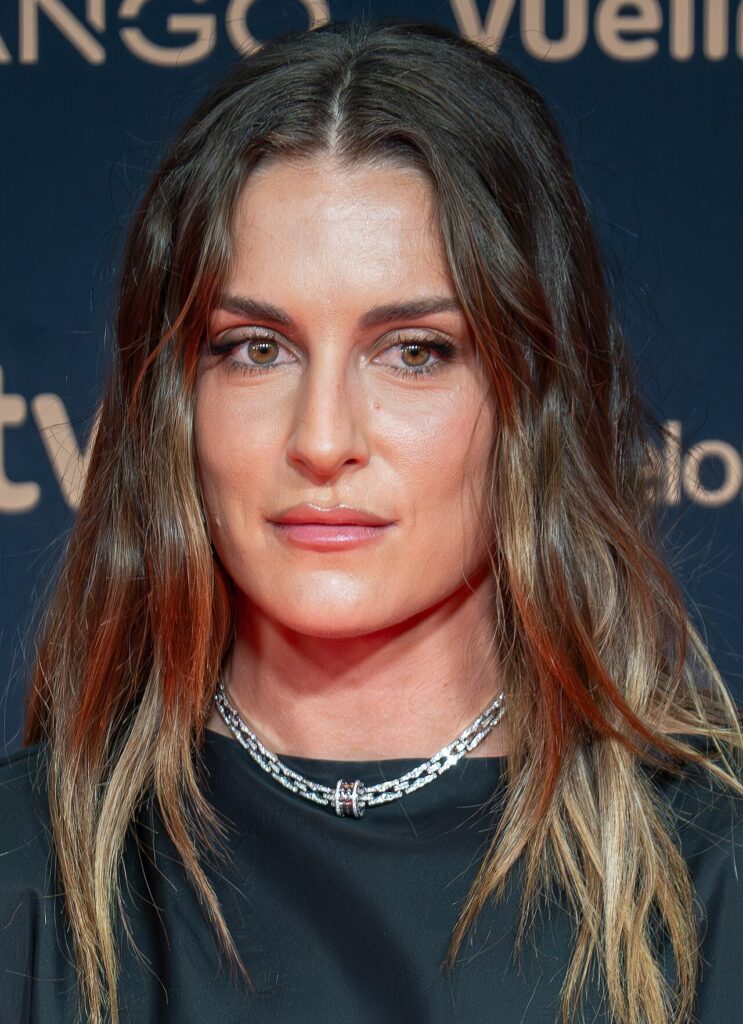
Image: Pedro J Pacheco / CC BY-SA 4.0, via Wikimedia Commons
Training Split
Elite club football runs on a match-day countdown, not a bodybuilder’s split. Barcelona Femení typically play one or two games a week between Liga F, the Copa de la Reina and the Champions League, so the week is built backwards from kickoff. Here’s how a one-match week is structured for a central midfielder in her position.
Day 1: Post-Match Recovery
- Pool session — 20-25 min easy swimming and water walking
- Stationary bike — 15 min at low resistance
- Foam rolling: quads, adductors, glutes, calves — 10 min
- Static stretching — 15 min
- No gym loading. Starters who played 90 minutes do this only.
Day 2: Lower-Body Strength
- Trap bar deadlift — 4 sets x 5 reps (heavy, 2-3 min rest)
- Rear-foot elevated split squat — 3 sets x 8 reps per leg
- Nordic hamstring curl — 3 sets x 5 reps (eccentric focus, ACL/hamstring insurance)
- Copenhagen adductor plank — 3 sets x 20-30 sec per side
- Single-leg calf raise — 3 sets x 12 per leg
- Pitch work: rondos, 5v5 possession, 45 min
Day 3: High-Intensity Running and Upper Body
- Repeated sprint sets — 6 x 40 m with 60 sec rest
- Shuttle runs with change of direction — 8 x 20 m
- Pull-ups or lat pulldown — 3 sets x 8-10 reps
- Dumbbell bench press — 3 sets x 10 reps
- Half-kneeling cable press — 3 sets x 10 per side
- Pallof press — 3 sets x 12 per side
- 11v11 tactical block, 40-50 min
Day 4: Speed, Power and Plyometrics
- Box jumps — 4 sets x 4 reps
- Single-leg lateral bounds — 3 sets x 6 per side (landing mechanics emphasized)
- Hex bar jump — 3 sets x 3 reps, light load
- Barbell hip thrust — 4 sets x 6 reps
- Flying 20 m sprints — 4 reps, full recovery
- Finishing drills and long-range striking — 20 min
Day 5: Activation and Tactical
- Mobility and band activation circuit — 15 min
- Short passing patterns, set-piece rehearsal
- Small-sided games at low volume — 25 min
- No heavy lifting within 48 hours of kickoff
Day 6: Match Day
Pre-match activation: glute bridges, banded lateral walks, pogo hops, progressive sprints. Then 90 minutes of the real thing.
Cardio Routine
Almost none of her conditioning happens on a treadmill. Match-specific running is the cardio — midfielders at her level routinely clock 10-11 km per game with 20-30 high-speed efforts above 20 km/h. Training sessions replicate that through small-sided games, which spike heart rate without the mental grind of steady-state running.
The exceptions are recovery days (15-20 minutes of easy cycling) and preseason, where extended aerobic blocks of 30-45 minutes are used to rebuild the base after the summer break.
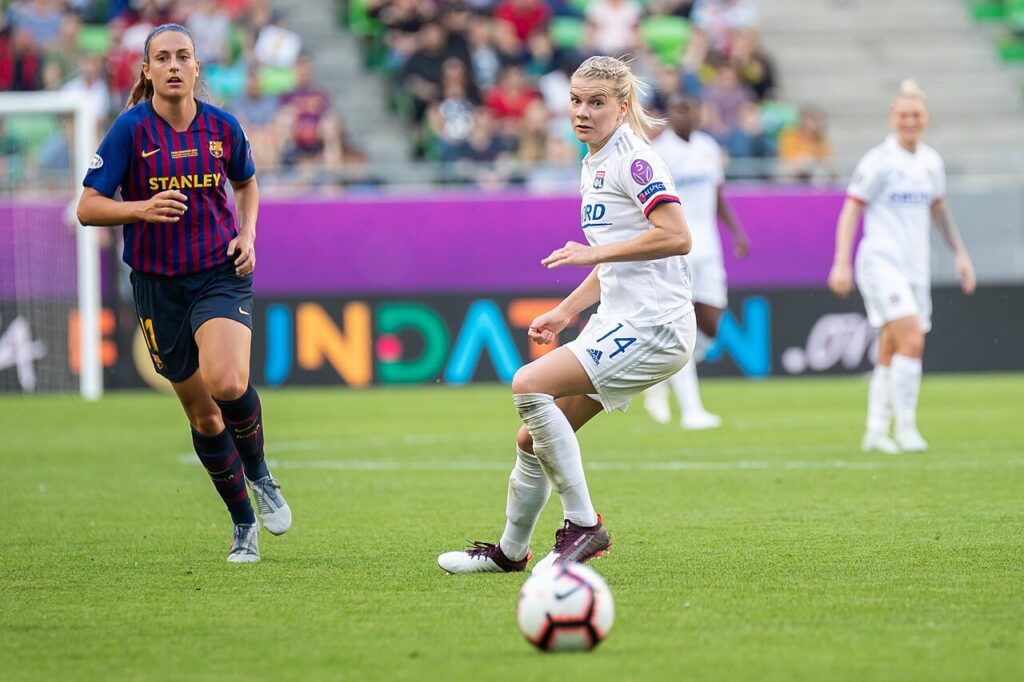
Image: Steffen Prößdorf / CC BY-SA 4.0, via Wikimedia Commons
ACL Rebuild: The Nine-Month Return
Putellas underwent surgery in Barcelona days after the injury. The rebuild ran in rough phases:
- Weeks 0-6: Swelling control, quad activation, restoring full knee extension. Crutches early, then partial weight bearing.
- Weeks 6-12: Pool running, stationary bike, leg press, isometric holds. Building quad strength back toward the uninjured side.
- Months 3-5: Gym-based bilateral and single-leg strength. Straight-line jogging introduced only once strength markers were hit.
- Months 5-7: Plyometrics, landing drills, deceleration and cutting work — the phase where most re-injuries happen.
- Months 7-9: Ball work, non-contact team training, then full contact.
She returned to competitive action in April 2023, around nine months post-op, coming off the bench. By August she was part of the Spain squad that won the World Cup in Sydney. The caution paid off — she’s stayed available since.
Recovery and Flexibility
Sleep is the non-negotiable: elite clubs target 8-9 hours, with naps after morning sessions. Barcelona’s setup includes cryotherapy, contrast baths, compression boots and regular physiotherapy. Putellas has spoken about how much the psychological side of recovery mattered during her layoff — working with the club’s sport psychologist was as important as the leg press.
Mobility work is daily and unglamorous: hip flexor and adductor stretching, ankle dorsiflexion drills, thoracic rotations. For a player with a long history of knee loading, ankle and hip mobility is what keeps the knee out of bad positions.
Personal Trainer
She doesn’t use a celebrity personal trainer. Her programming comes from Barcelona Femení’s performance department — physical coaches, physios and the club’s medical services, coordinated with the Spain national team staff. Her ACL surgery was handled by Barcelona-based specialists who’ve operated on a long list of Spanish professional athletes, with the club’s rehab team managing the return-to-play progression.
Workout Stats
| Metric | Detail |
|---|---|
| Training Frequency | 5-6 days/week |
| Session Duration | 75-120 minutes |
| Primary Focus | Functional strength, power, injury resilience |
| Cardio | Small-sided games and sprint intervals, 40-60 min/day |
| Gym Sessions | 2-3 per week |
| Match Distance | ~10-11 km per 90 minutes |
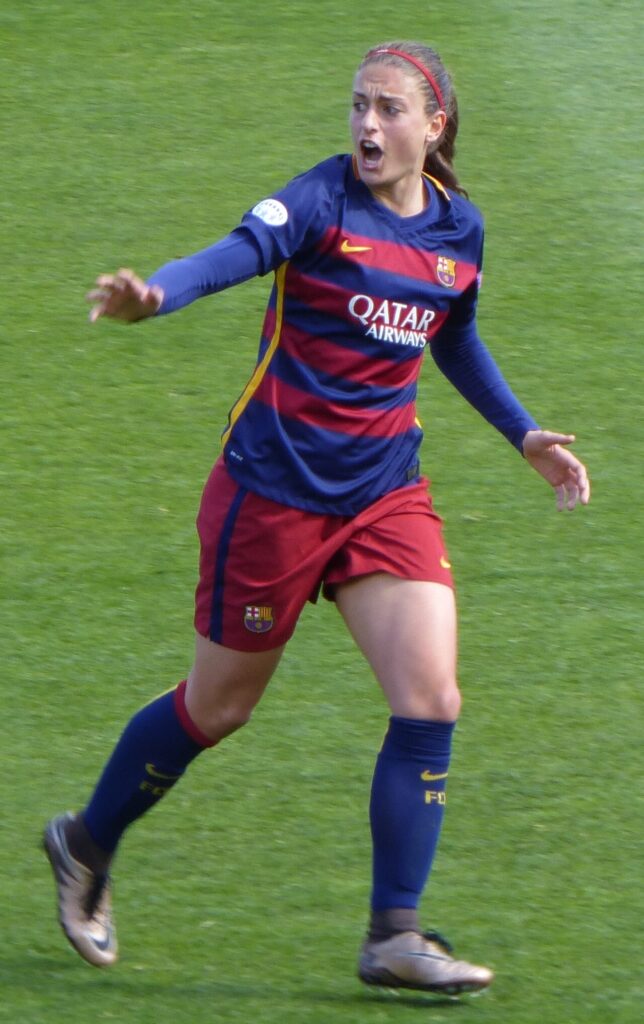
Image: Electro07 / CC BY-SA 4.0, via Wikimedia Commons
Frequently Asked Questions
How does Alexia Putellas work out?
She trains on a match-day countdown rather than a bodybuilder’s split, combining lower-body strength, repeated sprint work, plyometrics and tactical pitch sessions. The emphasis is on tendon resilience, single-leg strength and deceleration mechanics instead of raw mass.
How often does Alexia Putellas train?
She trains six days a week around one or two matches, with each day assigned a role: recovery, lower-body strength, high-intensity running, speed and power, activation, then match day.
Who designs Alexia Putellas’s training program?
Her program is built by Barcelona Femení’s performance and medical staff, who structure the week backwards from kickoff. Her nine-month ACL rehab after the July 2022 injury was also run by the club’s rehab team.
What are Alexia Putellas’s key exercises?
Trap bar deadlifts (4×5), rear-foot elevated split squats, Nordic hamstring curls, Copenhagen adductor planks, barbell hip thrusts, box jumps and single-leg lateral bounds. The Nordics and Copenhagens act as ACL and hamstring insurance.
What cardio does Alexia Putellas do?
Her conditioning is football-specific: 6 x 40 m repeated sprints with 60-second rest, 8 x 20 m change-of-direction shuttles, flying 20 m sprints and 11v11 tactical blocks. She covers 10-11 km in a typical match.
How does Alexia Putellas recover and rest?
The day after a match is pure recovery — 20-25 minutes of easy swimming and water walking, 15 minutes on the bike, foam rolling and static stretching with no gym loading. She also avoids heavy lifting within 48 hours of kickoff.
More Alexia Putellas Celebrities

Trending Now


Recommended Fitness Gear
Last Updated: October 28, 2026 | Source: Healthy Celeb